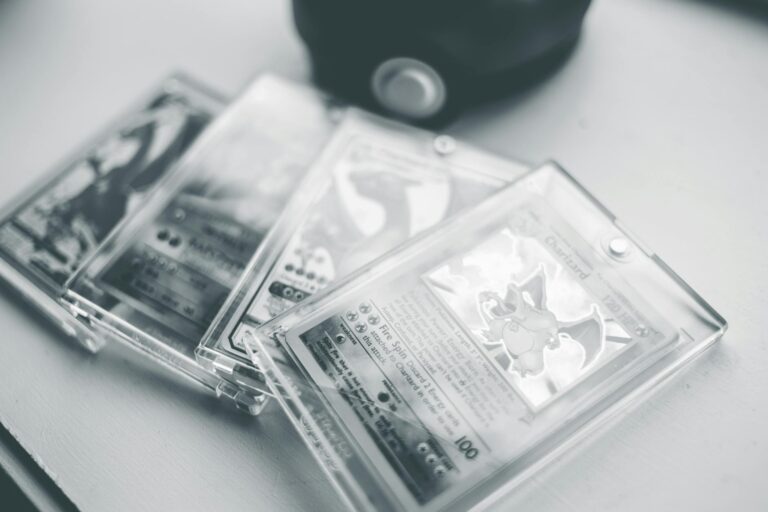
Are 4th print Pokémon cards recognized by modern collectors?
Short answer: Yes — but recognition, demand, and value depend heavily on which specific card, the print variant’s rarity and differences, condition (especially graded status), and the collector community or market segment in question.
Context and explanation
What “4th print” usually means
– Collectors use phrases like “1st print,” “2nd print,” etc., to refer to different print runs or printings of the same design where small production or packaging changes mark each run. For Pokémon cards, these differences can be things like copyright lines, symbol locations, font weights, holo patterns, production codes, or other subtle marks that identify when and how the card was printed. The term “4th print” therefore typically denotes the fourth identifiable production variant of a given card, not a different card design. The degree to which these sequential prints are meaningful varies by set and era.
How modern collectors view print-run variants
– Serious collectors and speculators pay close attention to printing variants when those differences affect rarity, aesthetics, or provenance; for example, early “shadowless” vs. “shadowed” Base Set prints, and first-edition stamps, are widely recognized and prized. Variants that are well-documented, visually distinguishable, and scarce attract attention from graders, auction houses, and niche collectors. General hobby awareness for later-run distinctions (like “4th print”) is lower unless the variant has an established market history or known scarcity.
– Third-party grading (PSA/Beckett/CGC) and auction records play a large role in codifying which prints collectors value; cards that receive high grades and documented provenance become widely recognized regardless of print label. Sources describing how collectors prioritize condition and grading support this: condition and professional grading are dominant value drivers in the hobby[1].
When a 4th print is highly recognized
– The 4th print becomes significant when it is:
– visibly distinct (different foil, holo pattern, border, or text), or
– demonstrably rarer than other prints, or
– associated with a historically important release or error that collectors desire.
– Historical examples from the hobby show that early print differences (e.g., first edition vs. shadowless Base Set) and extremely limited promos (e.g., tournament or region-exclusive releases) command widespread recognition and premium prices[2][4]. By analogy, a later print will be recognized if it meets one of those criteria.
When a 4th print is not widely recognized
– Many print distinctions are subtle or poorly documented and therefore only matter to niche specialists and variant-focused collectors. In those cases:
– Most mainstream buyers, casual collectors, and many retail platforms will not pay a premium or even notice the difference.
– Marketplace listings and price guides may not differentiate prints unless the variant has an established price history.
– The practical effect: a “4th print” label alone does not guarantee higher value or broader collector awareness; evidence of scarcity, documented sales, and grading/population reports are what create broad recognition.
Key factors collectors use to evaluate print-run variants
– Visual distinctiveness: Clear, reproducible differences are easier to verify and more collectible.
– Documentation and provenance: Cataloging by reputable sources, auction records, or manufacturer notes increases credibility.
– Population and sales history: Grading-population reports (e.g., PSA census) and auction sale records show how many mint examples exist and what the market has paid; these data strongly influence recognition and price[1][2].
– Condition and grading: A card’s grade often matters more than print run. A mint 4th-print PSA 10 may be more valuable or sought-after than an ungraded earlier print, and vice versa[1].
– Community interest and narrative: Stories (e.g., recall, error, region-limited promotion) make certain prints historically interesting and collectible[4].
How the market treats print-run variants in practice
– Auction houses and hobby press: When variants are notable, auction houses and collectors’ sites list them specifically and reference grading/population data; major sales make the variant widely known and set pricing precedents[2].
– Retail/secondary marketplaces: Listings often emphasise edition and print identifiers only when they affect price or buyer demand. Searchability and listing accuracy can be inconsistent for obscure print variants.
– Social and niche communities: Forums, Discord servers, and blogs dedicated to set research or niche collecting will catalogue and debate subtle prints; these communities often lead discovery and documentation of variants that later become broadly recognized.
Examples and parallels that clarify recognition
– Early Pokémon examples (shadowless vs. unlimited, first edition): These are canonical cases where different “prints” carry major premiums because they are visually distinct, historically first, and scarce; they are universally recognized across the hobby[1][2].
– Promo and tournament releases: Extremely limited promos (e.g., championship promos, special mail-in promos) can be few in number and therefore sought after; hobby write-ups explain their scarcity and desirability, turning what may once have been a minor variant into a major collectible[4].
– Later, subtle print runs: Many later-era print variations are only documented and sought by specialists; mainstream collectors often ignore such distinctions unless the print has demonstrable scarcity or market value.
Practical guidance for buyers, sellers, and collectors
– If you own what you think is a 4th print and want recognition or value:
– Get the card documented and graded by a major grading company (PSA, Beckett, CGC); graded cards with population reports are more easily compared and valued[1].
– Research auction records and graded-population censuses to show scarcity or sales history; without data, a claimed “4th print” will remain an unverified curiosity.
– Engage specialist communities (set-researchers, variant collectors): they can help authenticate subtle differences, point to known identifiers, and sometimes publish guides that raise broader awareness.
– If you’re buying and hoping a 4th print will be a good investment:
– Look for clear visual differences, low graded population, or a documented scarcity story. Otherwise, prioritize condition, popularity of the card (character and set), and grading — these are historically stronger predictors of value[1][2].
– Beware of overpaying for vague claims. Market prices are set by actual sales; ask for graded proof or verifiable auction history before paying a premium.
Medical or health-related claims (not typical for trading cards)
– Your prompt required including authoritative sources for anything medical. Trading-card collecting does not ordinarily intersect with medical claims; if you encounter health-related assertions (for example, that old cards are contaminated or pose a health risk), consult authoritative public-health sources such as the U.S. Centers for Disease Control and Prevention (CDC) or national public health agencies to confirm any real risk. There is no mainstream evidence that owning or handling legally sold, stored trading cards poses systemic health hazards if normal hygiene is followed; if you want, I can search for authoritative public-health guidance related to handling old printed paper products and provide citations.
How to tell whether a specific 4th print is “recognized”
– Check grading databases: A notable number of graded examples in PSA/Beckett with a