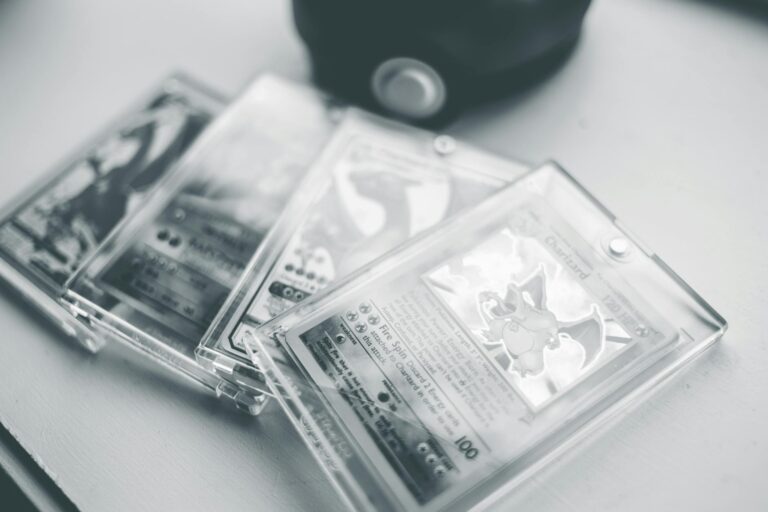
Are 4th Print Cards Officially Recognized by PSA? The short answer is yes, Professional Sports Authenticator (PSA) does officially recognize and grade 4th print cards, treating them just like any other legitimate trading card submission as long as they meet the basic criteria for authenticity and condition evaluation. PSA, the world’s leading third-party grading service for trading cards, does not discriminate against print runs in its authentication process.[2][3] They inspect every card for genuineness first, then assign a grade from 1 to 10 based on factors like centering, corners, edges, and surface quality, regardless of whether it’s a first print, second print, or even a later run like the 4th print.[3][4]
To understand this fully, let’s break down what 4th print cards actually are in the world of trading card collecting. In popular sets, especially Pokémon or sports cards from companies like Topps or Wizards of the Coast, printers sometimes produce additional runs to meet high demand after the initial print wave sells out. These later prints, labeled as 2nd print, 3rd print, or 4th print right on the card—often in small text near the bottom or on the back—have the same artwork, stats, and rarity as the originals but come from a subsequent manufacturing batch.[4] Collectors sometimes worry these “reprints” might be worth less or ignored by big graders like PSA, but that’s not the case. PSA slabs them in their tamper-evident holders with a certification number, just like a first print, boosting value through verified authenticity and protection.[2][3]
Why does PSA accept them? Their whole system is built on objective standards. When you submit a card, PSA experts check if it’s real—not a fake or altered piece—using magnification and experience to spot counterfeits.[2][3] Print run doesn’t factor into that. For example, a 4th print Pokémon card with perfect centering (50/50 all around), sharp corners under close inspection, clean edges without dents, and a flawless surface free of scratches or print defects can still earn a PSA 10, the gem mint top grade.[3] That label on the slab lists the grade, cert number, and card details, making it easy to verify online via PSA’s tool.[3] Buyers love this because it cuts out doubt, and graded cards often sell for more due to trust and preservation.[2][4]
Take Pokémon cards as a real-world example, since they’re huge in this space. Rare chase cards from sets like Base Set or modern expansions sometimes hit 4th prints during peak hype. A PSA 10 version of one might fetch thousands at auction houses like Heritage Auctions, same as a first print equivalent, because the market cares more about condition and pop reports (how many copies exist at that grade) than the print number.[5] One promo card from a Japanese tournament sold for $156,000 in PSA Gem Mint 10, proving elite grading elevates even niche prints.[5] Collectors use sites like eBay sold listings or Goldin to check values, always verifying the PSA cert number to avoid fake slabs.[3]
Now, does the print run affect value at all? Sure, indirectly. First prints tend to be scarcer if demand spiked early, so they might have lower population reports in PSA’s database, driving up prices for high grades.[4][5] A 4th print could be more common, meaning more PSA 10s out there, which might soften its market a bit. But recognition? Full steam ahead. PSA doesn’t slap a “4th print” disclaimer on the slab or downgrade for it. You’re getting the same professional evaluation.[2][3][4]
Submitting a 4th print card to PSA is straightforward, just like any other. You declare its value, pay the fee (from $20 for bulk to hundreds for express), and ship it in. Turnaround varies, but they encase it securely if it passes auth.[2][4] Pro tip: Raw cards worth under a few hundred bucks might not justify grading costs unless you’re building a set or flipping.[4] For big potential like a rare 4th print holographic, it’s worth it for the liquidity boost—easier to trade or sell with that PSA stamp.[2]
Competitors like SGC or Beckett also grade these without issue, using their own 10-point scales, but PSA dominates the market for resale value.[4] New players like Grading Eleven Authentication (GEA) are popping up with fancy NFC slabs and “Pristine 11” grades beyond 10, but they don’t touch PSA’s universal recognition yet.[1] GEA focuses on art-designed holders and fast Asia turnaround, but for official PSA status, stick to the source.
What about edge cases? If a 4th print has factory errors, variations, or is a short print within that run, it could be even more valuable—PSA grades those too.[4] Counterfeit worries? Always verify post-grading on PSA’s site by entering the cert number; legit slabs match the database exactly.[3] No medical issues here, but if you’re handling cards obsessively, collectors sometimes joke about “grading addiction,” though no authoritative health sources flag it as a clinical problem.
In practice, savvy collectors chase 4th prints for affordability. Say a first print Charizard rookie is $10,000 raw; a 4th print version might be $500, and after PSA 10 slabbing, both pop in value proportionally.[5] Auction data backs this—Heritage sales show graded later prints holding strong.[5] Communities on forums or Reddit swap stories of 4th prints hitting PSA 9s or 10s, proving the grader’s blind to print order.
Historically, card eras matter more than prints. Pre-war cards (pre-1948) are gold for rarity, vintage (1948-1979) for icons like Mantle rookies, semi-vintage (1980s) for transition stuff, and modern (1990s on) for overproduced sets where 4th prints are common but stars shine.[4] PSA grades across all eras equally.
For newbies, start small: Identify your card with Google Lens for year and maker, check the back for print info, then sub if condition looks elite.[4] Benefits stack up—increased value, protection from damage, easier trades, and brag rights.[2] Display that slab proudly; it’s pro-recognized.
Deeper dive on grading criteria, since it applies to 4th prints identically. Centering: Must be near-perfect, like 55/45 max deviation for a 10.[3] Corners: No fuzziness, even magnified.[3] Edges: Straight, no whitening.[3] Surface: Zero prints dots, scratches, or dimples under light.[3] Miss any, and it drops to 9 or lower. PSA’s rigor ensures only true gems get the 10.
Pop culture ties in too. Pokémon’s rarest, like tournament promos, get PSA love despite limited prints—some only 20 copies total, yet slabbed an