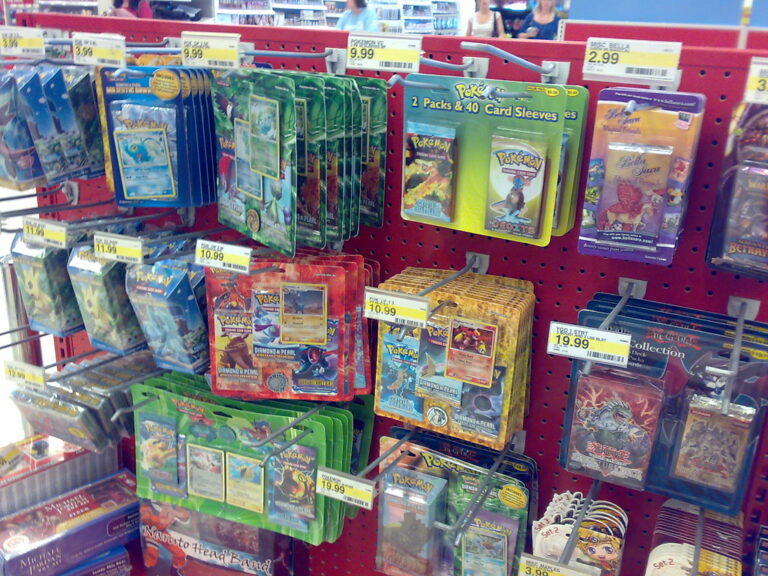
Pokémon cards can be a strong investment in 2026, but only if you know which corners of the market to target. Vintage graded cards and scarce sealed product have delivered extraordinary returns over the past two decades, with the overall Pokémon card market surging 3,261% over 20 years compared to the S&P 500’s 483% gain over the same stretch. The most dramatic proof came on February 16, 2026, when Logan Paul’s PSA 10 Pikachu Illustrator card sold at Goldin Auctions for $16.492 million, more than tripling the $5.275 million he paid five years earlier and setting a Guinness World Record for the most expensive trading card ever sold at auction. But that headline number masks a split market.
While vintage and rare cards are climbing, modern sealed products have dropped 20 to 50 percent as the market corrects from pandemic-era overproduction. The Pokémon Company produced 9.7 billion cards in its most recent fiscal year, representing 18.3% of all Pokémon cards ever manufactured in a single year. That kind of supply pressure makes modern mass-printed cards a risky bet. So the real answer is nuanced: Pokémon cards are a good investment if you focus on scarcity, condition, and patience. This article breaks down exactly where the money is being made and lost in 2026, covering long-term performance data, the impact of the 30th anniversary, which specific cards are gaining value, the risks financial advisors flag, and how to structure a collecting portfolio that balances growth with protection.
Table of Contents
- How Have Pokémon Cards Performed as an Investment Over Time?
- Why the 30th Anniversary Is Driving Prices Higher in 2026
- Which Specific Cards Are Gaining the Most Value Right Now?
- How to Build a Pokémon Card Investment Portfolio in 2026
- The Risks That Could Undermine Your Returns
- Why Grading Is the Single Most Important Factor for Investment-Grade Cards
- What the Market Looks Like Heading Into 2027 and Beyond
- Conclusion
- Frequently Asked Questions
How Have Pokémon Cards Performed as an Investment Over Time?
The long-term numbers are hard to argue with. According to Yahoo Finance data, the average value of Pokémon cards has risen roughly 46% in the last year alone, dwarfing the S&P 500’s typical annual return of around 12%. Graded vintage cards have been the standout performers. A Base Set Charizard in PSA 9 condition, for example, has appreciated at roughly 37.5% annually, a rate that would turn a $500 purchase into tens of thousands over a decade. PSA 10 graded cards routinely command a 2 to 5 times premium over raw ungraded copies of the same card, which means the grading process itself can multiply your return. Sealed booster boxes tell a similar story.
Unopened boxes from earlier eras have demonstrated a compound annual growth rate of 15 to 35 percent, depending on the set and era. A sealed Base Set booster box that might have sold for a few hundred dollars at retail in the late 1990s now trades for six figures. The scarcity math is straightforward: most boxes were opened, so the sealed supply only shrinks over time while nostalgia-driven demand grows. The comparison to traditional asset classes puts this in perspective. Over 20 years, Pokémon cards have outperformed not just the stock market but also gold and real estate on a percentage-gain basis. That said, past performance in collectibles is notoriously unreliable as a predictor of future returns, and the market lacks the liquidity, regulation, and transparency of securities markets. You cannot dollar-cost average into Pokémon cards the way you can into an index fund, and selling a high-value card can take weeks or months to find the right buyer.
Why the 30th Anniversary Is Driving Prices Higher in 2026
Pokémon’s 30th anniversary in 2026 is functioning as a market catalyst the way a product launch might move a stock. Vintage cards and special anniversary sets have climbed 30 to 50 percent heading into this milestone year, with collectors and speculators alike positioning themselves early. The Pokémon Company has leaned into the celebration with a Super Bowl LX commercial on February 8, 2026, featuring Jigglypuff, which brought mainstream attention back to the brand at a scale that benefits the entire market. On the product side, several new releases are fueling both collector interest and speculative demand. The Ascended Heroes set, which brought back Mega Evolutions, launched on January 30. A Pokémon Day 2026 Collection dropped for the anniversary itself.
And a three-wave First Partner Illustration Collections series begins rolling out on March 30, giving collectors multiple entry points throughout the year. Prices on older anniversary sets like Generations and the 25th Anniversary Celebrations collection have already climbed in anticipation, as collectors draw parallels to how those sets performed after their own milestone years. However, if you are buying into anniversary hype expecting a quick flip, the historical pattern suggests caution. Previous anniversary products saw price spikes around release followed by corrections once supply caught up with demand. The 25th Anniversary Celebrations ETBs, for instance, spiked on release day, dipped as reprints arrived, and only began their sustained climb once the print run was confirmed as finished. Timing matters, and buying at peak hype often means overpaying for product that will be cheaper three months later.
Which Specific Cards Are Gaining the Most Value Right Now?
The cards seeing the most dramatic appreciation in 2025 and into 2026 share two traits: limited print runs and strong nostalgic or aesthetic appeal. The alt-art Umbreon VMAX, nicknamed “Moonbreon” by the community, crossed the $2,000 threshold for the first time on September 10, 2025, after a coordinated buyout event cleared available supply from major marketplaces. Its companion card, Umbreon V, spiked to an all-time high of approximately $550 around the same time following speculative purchasing activity in August 2025. At the high end, the alt-art Latias and Latios-GX saw its floor price rise to $2,699.93, driven by collectors recognizing the card’s limited availability from the late Sun and Moon era. The broader category of alt-art TAG TEAM cards from that period has trended upward throughout 2025 and into 2026, as the community has come to understand just how constrained those print runs were compared to modern Sword and Shield or Scarlet and Violet products.
On the vintage side, a PSA 10 Shadowless Charizard Holo sold for $45,322 in February 2025, a strong data point for tracking how the most iconic card in the hobby holds value at the highest grade. And then there is the pikachu Illustrator, the card that sits alone at the top. With only 39 copies ever produced as prizes for a 1998 CoroCoro Comic drawing contest in Japan, the card that sold for $16.492 million at Goldin saw its final price surge from $6.88 million to its record-setting finish during extended last-minute bidding that drew 97 total bids over 41 days. The buyer, A.J. Scaramucci, son of venture capitalist Anthony Scaramucci, treated it as both a collectible and an asset acquisition.
How to Build a Pokémon Card Investment Portfolio in 2026
The expert consensus heading into 2026 points to a recommended portfolio split of roughly 60% sealed product and 40% singles. The logic behind weighting sealed product more heavily is that unopened boxes and packs have a natural supply reduction over time as people open them, while singles depend more heavily on shifting collector demand for specific cards. Sealed product from sets with confirmed ended print runs tends to appreciate steadily, while singles can spike or crash based on competitive play rotations, social media trends, or speculative buyouts. Within the singles portion, grading is not optional for investment purposes. PSA, CGC, and BGS graded cards carry significantly less risk and deliver higher returns than raw ungraded cards. The 2 to 5 times premium that a PSA 10 commands over a raw copy reflects the market’s willingness to pay for verified condition and authenticity.
If you are holding ungraded vintage cards as investments, you are leaving money on the table and carrying unnecessary risk, since condition disputes can crater a sale. The tradeoff worth understanding is between vintage and modern. Vintage graded cards and scarce sealed product carry projected compound annual growth rates of 15 to 25 percent through 2035, according to market analysts. Modern cards, by contrast, face headwinds from massive print volumes. If you are choosing between a PSA 9 Base Set Blastoise and a sealed case of a current set, the vintage card has a clearer path to appreciation, but it also requires more capital upfront and more expertise to authenticate. Modern sealed product is cheaper to acquire and easier to store, but you are betting against an ocean of supply.
The Risks That Could Undermine Your Returns
Financial advisors consistently warn that collectibles are extremely volatile and should not function as core portfolio holdings. Pokémon cards lack the regulatory protections of securities, the income generation of real estate, and the intrinsic utility of commodities. A card is worth what someone will pay for it, and that number can shift based on factors entirely outside your control, from a social media influencer’s offhand comment to a reprint announcement from The Pokémon Company. The oversupply issue in modern cards is the most concrete risk to understand. When The Pokémon Company produces 9.7 billion cards in a single fiscal year, accounting for 18.3% of all Pokémon cards ever manufactured, it creates enormous downward pressure on the value of anything currently in print.
Modern sealed products being down 20 to 50 percent in 2026 is a direct result of this dynamic. Collectors who bought cases of Scarlet and Violet era booster boxes expecting pandemic-era appreciation curves are sitting on losses. Speculative buyouts represent another risk that is unique to the collectibles space. The Moonbreon and Umbreon V price spikes were driven in part by coordinated purchasing by online groups, which temporarily cleared supply and created artificial price ceilings. If you bought at those peaks, you may be holding cards at valuations that do not reflect organic demand. Short-term pricing in the Pokémon market can be deeply unreliable, and treating a social-media-driven spike as a signal to buy is a recipe for overpaying.
Why Grading Is the Single Most Important Factor for Investment-Grade Cards
The gap between a graded and ungraded card is not just about a plastic case and a number. It is about liquidity. A PSA 10 Base Set Charizard sells faster, sells for more, and attracts more serious buyers than the same card sitting in a penny sleeve. The 2 to 5 times premium that graded cards command exists because grading removes uncertainty.
A buyer knows exactly what condition they are getting, and that confidence translates directly into higher prices. For anyone treating Pokémon cards as an investment, submitting cards to PSA, CGC, or BGS should be viewed as a cost of doing business, not an optional expense. The grading fee is almost always recouped and then some on cards with investment-grade potential. A raw vintage holo might sell for $200, but the same card in a PSA 9 slab could fetch $800 or more. The math is simple, but a surprising number of collectors skip this step and then wonder why their returns lag behind market averages.
What the Market Looks Like Heading Into 2027 and Beyond
The forward outlook for Pokémon card investing hinges on whether the 30th anniversary energy sustains into 2027 or fades the way previous milestone celebrations did. Analysts projecting 15 to 25 percent compound annual growth through 2035 are basing those estimates primarily on vintage and scarce product, not on the broad market. If The Pokémon Company continues producing at its current volume, the gap between vintage and modern will likely widen further, with pre-2020 cards increasingly treated as a separate asset class from anything printed in the current era. The $16.492 million Pikachu Illustrator sale set a psychological anchor for the entire hobby.
Whether or not another card ever reaches that price, the sale established Pokémon cards in the same conversation as fine art and rare coins in the alternative investment space. Institutional interest, including buyers like A.J. Scaramucci coming from venture capital backgrounds, suggests that the high end of the market is becoming more professionalized. For the average collector-investor, the practical takeaway is unchanged: focus on scarcity, insist on grading, think in years rather than months, and never allocate money to trading cards that you cannot afford to lose.
Conclusion
Pokémon cards in 2026 present a genuine investment opportunity, but only for those willing to be selective and patient. The numbers support the case: 3,261% growth over 20 years, 37.5% annual appreciation on graded vintage staples, and a record-shattering $16.492 million auction that proved the ceiling for this market is higher than most people imagined. Vintage graded cards, scarce sealed product, and limited-print-run alt-arts are where the real returns are concentrated. The other side of the ledger deserves equal attention.
Modern mass-printed cards are losing value, oversupply is a structural problem, and speculative buyouts can distort prices in ways that trap late buyers. Financial advisors are right to caution against treating collectibles as a core investment. The smartest approach is to treat Pokémon cards as an alternative asset class within a diversified portfolio, weighted toward sealed product and high-grade vintage singles, with a time horizon measured in years. If you can do that with discipline, the data suggests you will be rewarded.
Frequently Asked Questions
What is the most expensive Pokémon card ever sold?
As of February 2026, it is the PSA 10 Pikachu Illustrator card, which sold at Goldin Auctions for $16.492 million. Only 39 copies of this card exist, originally awarded to winners of a 1998 CoroCoro Comic illustration contest in Japan.
Are modern Pokémon cards worth investing in?
Generally, modern cards are risky investments. The Pokémon Company produced 9.7 billion cards in its most recent fiscal year, and modern sealed products have dropped 20 to 50 percent in value during 2026. Exceptions exist for cards with limited print runs or strong alt-art appeal, but broad modern product carries significant oversupply risk.
How much does grading affect a Pokémon card’s value?
Significantly. PSA 10 graded cards command a 2 to 5 times premium over the same card in raw, ungraded condition. Grading through PSA, CGC, or BGS verifies condition and authenticity, which increases buyer confidence and speeds up sales.
Do Pokémon cards outperform the stock market?
Over the past 20 years, Pokémon cards as a category have risen 3,261% compared to the S&P 500’s 483% gain. In the last year, average values rose approximately 46% versus the S&P’s typical 12%. However, these are aggregate figures, and individual card performance varies dramatically based on rarity, condition, and era.
What is the best ratio of sealed product to singles for a Pokémon investment portfolio?
Market analysts recommend a split of roughly 60% sealed product and 40% singles. Sealed product benefits from natural supply reduction as boxes are opened over time, while singles allow you to target specific high-value cards with strong appreciation histories.
How is the Pokémon 30th anniversary affecting card prices?
Vintage and special anniversary sets have climbed 30 to 50 percent heading into the 2026 milestone year. The Pokémon Company has amplified attention with a Super Bowl LX commercial and multiple special product releases, including the Ascended Heroes set and First Partner Illustration Collections series.