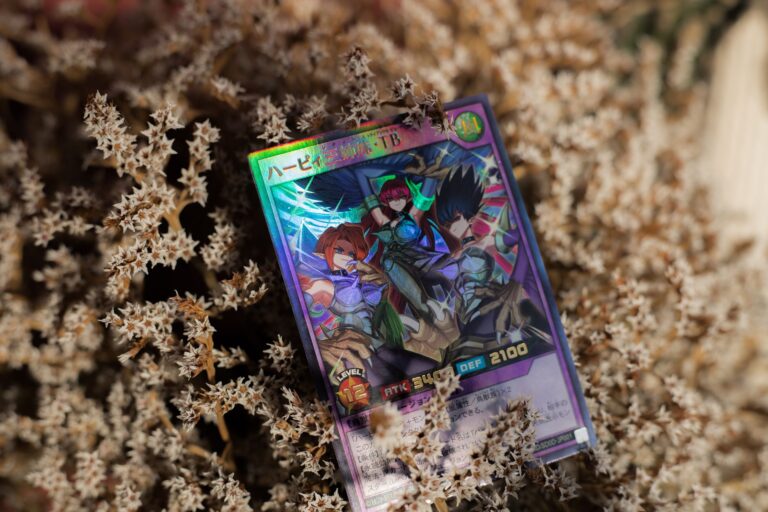
The most valuable Pokémon card ever sold is the Pikachu Illustrator in PSA 10 condition, which fetched a staggering $16,492,000 at Goldin Auctions on February 16, 2026. Logan Paul sold the card — the only PSA 10 copy in existence — to AJ Scaramucci, founder of Solari Capital, shattering every previous record for a trading card sale. That single transaction tripled the prior record and was certified by Guinness World Records as the most expensive trading card ever sold at auction.
But the Pikachu Illustrator is only the beginning. The top ten list includes Japanese trophy cards that fewer than 20 people on the planet can claim to own, a Blastoise test print that predates the English-language Pokémon TCG entirely, and the original Base Set holographic trio that defined a generation of collectors. Prices across the board surged in late 2025 and early 2026, with several cards clearing previous highs set during the pandemic-era boom. This article breaks down each of the ten most valuable Pokémon cards ever sold, explains what makes them so expensive, and offers context on where the market is heading for collectors weighing six- and seven-figure purchases.
Table of Contents
- What Are the Most Valuable Pokémon Cards Ever Sold and Why Do They Cost Millions?
- How Japanese Trophy Cards Dominate the High End of the Market
- The 1st Edition Base Set Charizard and the Blue-Chip Trio
- How Grading Condition Separates a $10,000 Card from a $500,000 Card
- Oddities, Test Prints, and Cards That Should Not Exist
- The Role of Celebrity Provenance in Pokémon Card Values
- Where the Pokémon Card Market Is Heading After the $16.49 Million Sale
- Conclusion
- Frequently Asked Questions
What Are the Most Valuable Pokémon Cards Ever Sold and Why Do They Cost Millions?
The prices on elite Pokémon cards are driven by three factors that compound on each other: scarcity, condition, and cultural significance. The Pikachu Illustrator card checks all three boxes. Only about 39 copies were ever produced, awarded as prizes in a 1998 Japanese illustration contest run by CoroCoro Comic. The PSA 10 specimen that sold for $16.49 million is the only one graded at that level. When you combine a one-of-one condition grade with a print run under 40, you get a card that functions more like a rare gemstone than a piece of cardboard. The second-highest sale on record is actually the same physical card. Logan Paul purchased the Pikachu Illustrator at PSA 7 for $5,275,000 in July 2021, which was itself a world record at the time. He later had it regraded and received a PSA 10, then flipped it at Goldin Auctions for $16.49 million — a 212% return on investment in under five years.
The sale also included a diamond-encrusted gold pendant appraised at $75,000, which Paul had worn at WrestleMania 38. That kind of provenance story only adds to the card’s mystique and future value. Rounding out the top three is the Pikachu Gold No. 1 Trainer Trophy card, graded PSA 9, which sold for approximately $3 million in September 2025 via eBay. Only 14 copies are known to exist worldwide. These were awarded to winners of official Pokémon tournaments in Japan during the late 1990s. The gap between the No. 1 spot and No. 3 — roughly $13.5 million — illustrates just how much the Pikachu Illustrator has separated itself from the rest of the market.
How Japanese Trophy Cards Dominate the High End of the Market
A pattern becomes obvious when you scan the top ten: Japanese prize and trophy cards occupy four of the top five spots. The pikachu Illustrator (No. 1 and No. 2), the Gold No. 1 Trainer Trophy (No. 3), and the Silver No. 2 Trainer Trophy (No. 5 at $444,000) were all produced in tiny quantities for Japanese events. These were never available in retail packs. You could not pull one from a booster box no matter how lucky you were. That distinction matters enormously in a market where scarcity is the primary price driver.
The Silver No. 2 Trainer Trophy, sold in 2023 for $444,000 in PSA 10, came from Japanese Mega Battle tournaments. Like the Gold No. 1, only about 14 copies exist. However, collectors should understand that “14 copies known” does not mean 14 are available. Many are held in private collections in Japan and may never surface on the open market. The actual supply at any given moment might be one or two cards — or none at all. This illiquidity is a double-edged sword: it supports astronomical prices when a copy does appear, but it also means there is no reliable way to buy one on demand. If you are collecting with an eye toward long-term value, Japanese trophy cards have historically outperformed their English-language counterparts. But they come with additional authentication challenges. Fewer grading submissions exist for reference, provenance can be harder to verify, and counterfeits targeting this segment of the market have become more sophisticated. Working with established auction houses like Goldin or Heritage mitigates some of that risk, though it does not eliminate it.
The 1st Edition Base Set Charizard and the Blue-Chip Trio
The 1st Edition Shadowless Charizard Holo in PSA 10 remains the most recognizable high-value Pokémon card for most collectors. It sold for $550,000 at Heritage Auctions in December 2025, surpassing the previous pandemic-era high of roughly $369,000. Only about 120 PSA 10 copies exist, which sounds like a lot compared to 14 Trainer Trophies or 39 Pikachu Illustrators — but demand for Charizard is on an entirely different scale. This is the card that casual fans think of first. That universal name recognition sustains a deep buyer pool. The other two members of the original starter trio also appear on the list.
The 1st Edition Base Set Blastoise Holo in PSA 10 sold for $88,000 via eBay in July 2025, while the 1st Edition Base Set Venusaur Holo in PSA 10 has traded in the $55,000 to $60,000 range in recent sales. Together, the three cards represent a snapshot of the original 1999 Pokémon experience for American and European collectors, and they tend to move in tandem. When Charizard surges, Blastoise and Venusaur follow — though never at the same magnitude. One detail worth noting: the Charizard’s $550,000 sale in late 2025 suggests the market has not only recovered from the post-2021 correction but has pushed to new highs. Collectors who bought PSA 10 Charizards during the 2022-2023 dip at prices in the low $200,000s are now sitting on significant gains. That said, past performance in collectibles is never a guarantee, and the Charizard market is more liquid — and therefore more volatile — than the ultra-rare trophy card segment.

How Grading Condition Separates a $10,000 Card from a $500,000 Card
Grading is the single most important variable separating a valuable Pokémon card from an extraordinarily valuable one. Logan Paul’s Pikachu Illustrator illustrates this perfectly. At PSA 7, the card sold for $5.275 million. At PSA 10, the same card sold for $16.49 million. That is a threefold price increase driven entirely by condition. The card’s art, its history, and its scarcity were identical in both transactions — only the grade changed. The same dynamic plays out at every price tier.
A 1st Edition Charizard Holo in PSA 9 might sell for $60,000 to $80,000, while a PSA 10 commands $550,000. The Neo Genesis Lugia Holo on this list sold for $144,300 specifically because it received a BGS 10 Pristine grade, which is even harder to achieve than a PSA 10. BGS requires all four subgrades — centering, corners, edges, and surface — to score a perfect 10. For a card printed in the early 2000s with the production tolerances of that era, a BGS 10 is exceptionally rare. The tradeoff for collectors is straightforward but uncomfortable: chasing the highest grade means paying exponentially more, and the difference between a PSA 9 and a PSA 10 often comes down to microscopic centering shifts or surface imperfections invisible to the naked eye. Some collectors prefer to buy PSA 9 copies at a fraction of the cost and accept the “discount.” Others view PSA 10 as the only grade worth holding for long-term appreciation. Both strategies have merit, but they serve fundamentally different goals — one optimizes for enjoyment and reasonable value, the other for maximum investment upside.
Oddities, Test Prints, and Cards That Should Not Exist
Not every card on the top ten list is a holographic heavy hitter or a tournament prize. The Blastoise Test Print, also called the Presentation Card, sold for $360,000 at Heritage Auctions in January 2021. Only two copies were ever produced. What makes this card unusual is its origin: Wizards of the Coast created it as a pitch to Nintendo before the Pokémon TCG launched in English. It features a gold border and a Magic: The Gathering card back — a bizarre hybrid that documents the moment before Pokémon cards became their own product line. The Snap Bulbasaur card, graded PSA 9, sold for $200,000 in mid-2025 via Fanatics Collect. It holds the distinction of being the most expensive Bulbasaur card ever traded.
These kinds of outliers warn against assuming that only Charizard and Pikachu command serious money. Unusual provenance, unique production circumstances, or crossover appeal can push any card into six-figure territory. However, collectors chasing oddities need to be more cautious about liquidity. A PSA 10 Charizard has dozens of comparable sales to establish fair market value. A one-of-two test print does not. If you need to sell quickly, finding a buyer willing to pay market rate for a card with no recent comparables is significantly harder. These are cards you buy because you genuinely want to own them, not because you expect a clean exit at a predetermined price point.

The Role of Celebrity Provenance in Pokémon Card Values
Logan Paul’s involvement in the Pikachu Illustrator sales added a layer of value that is difficult to quantify but impossible to ignore. The $16.49 million sale included the diamond-encrusted pendant Paul wore at WrestleMania 38, blending sports entertainment spectacle with card collecting in a way that attracted media coverage from CNN, the Japan Times, and dozens of other outlets. That publicity broadened the buyer pool beyond traditional collectors to include wealthy individuals who might never have considered a Pokémon card as an asset class.
Celebrity provenance is a real factor in auction results, but it is also unpredictable and non-transferable. The next owner of the Pikachu Illustrator cannot sell it with “previously owned by Logan Paul” as the same kind of draw — that story has been told. Collectors should be cautious about paying a premium for provenance that may not carry forward to future sales.
Where the Pokémon Card Market Is Heading After the $16.49 Million Sale
The February 2026 Pikachu Illustrator sale will likely reset expectations across the entire Pokémon card market. When the ceiling moves from $5 million to $16.5 million, cards previously considered expensive at $500,000 suddenly look like relative bargains. The December 2025 Charizard sale at $550,000 — already a record — may prove to be an early indicator of a broader repricing cycle.
Japanese trophy and prize cards remain the segment with the most room to run, simply because so few exist and global awareness of them is still growing. The 1st Edition Base Set holos are more mature as an asset class, with established price histories and relatively predictable trading ranges. For new collectors entering the market, understanding the difference between these two segments — illiquid ultra-rarities versus liquid blue chips — is the most important strategic decision to make before spending serious money.
Conclusion
The top ten most valuable Pokémon cards ever sold span a range from roughly $55,000 for a PSA 10 Venusaur to $16.49 million for the lone PSA 10 Pikachu Illustrator. What unites them is extreme scarcity, pristine condition, and deep emotional resonance with a collecting community that now spans three decades.
Japanese prize cards dominate the upper tier, while the 1st Edition Base Set holos anchor the market’s accessible high end. Whether you are evaluating a potential purchase or simply trying to understand why a piece of cardboard sells for more than most houses, the fundamentals remain the same: supply is fixed, demand is growing globally, and condition is the multiplier that separates good cards from record-breaking ones. The market’s trajectory after the February 2026 sale suggests we have not yet seen the ceiling for the rarest Pokémon cards in existence.
Frequently Asked Questions
What is the most expensive Pokémon card ever sold?
The Pikachu Illustrator card graded PSA 10 sold for $16,492,000 on February 16, 2026, at Goldin Auctions. Logan Paul sold it to AJ Scaramucci, founder of Solari Capital. It is the only PSA 10 copy of this card in existence.
How many Pikachu Illustrator cards exist?
Approximately 39 Pikachu Illustrator cards were produced in 1998 as prizes for a Japanese illustration contest run by CoroCoro Comic. Only one has received a PSA 10 grade.
How much is a 1st Edition Charizard worth in 2025-2026?
A 1st Edition Shadowless Charizard Holo graded PSA 10 sold for $550,000 at Heritage Auctions in December 2025. Lower grades sell for significantly less — PSA 9 copies typically trade in the $60,000 to $80,000 range.
Why are Japanese Pokémon trophy cards so expensive?
Japanese trophy cards were produced in extremely limited quantities — often fewer than 20 copies — as prizes for official Pokémon tournaments. They were never available in retail packs, making them among the scarcest Pokémon cards in existence.
Does the grading company matter for Pokémon card values?
Yes. PSA and BGS are the two most widely recognized grading services. A BGS 10 Pristine is generally considered harder to achieve than a PSA 10, which can affect pricing. The Neo Genesis Lugia Holo on this list sold for $144,300 specifically because of its BGS 10 Pristine grade.
Is the Pokémon card market still going up in 2026?
The February 2026 Pikachu Illustrator sale and the December 2025 Charizard record suggest strong momentum at the high end. However, collectibles markets are cyclical, and past performance does not guarantee future returns. The mid-tier market has been more uneven.