Understanding what is the evolution of mankey is essential for anyone interested in Pokemon card collecting and pricing. This comprehensive guide covers everything you need to know, from basic concepts to advanced strategies. By the end of this article, you’ll have the knowledge to make informed decisions and take effective action.
Table of Contents
- How Does Mankey Evolve Into Primeape and Beyond?
- The Original Generation I Evolution: Mankey to Primeape
- Generation IX Changes Everything: The Arrival of Annihilape
- Rage Fist Mechanics: Understanding the Unique Evolution Trigger
- Mankey Evolution Cards in the Pokemon TCG
- Collector Considerations: Building a Complete Mankey Line Set
- Why the Mankey Line Gained New Relevance
- Future Outlook for Mankey Evolution Collectibles
- Conclusion
How Does Mankey Evolve Into Primeape and Beyond?
Mankey evolves into Primeape through a simple level-based trigger at level 28. Both Pokemon are pure Fighting-types, maintaining consistent typing throughout this first evolution. In the games, this means a Mankey caught at level 5 in the wild requires 23 additional levels before it transforms. Compared to other Fighting-types from Generation I, this sits in a moderate range. machop requires trading to fully evolve, while Hitmonlee and Hitmonchan have no evolutions at all in their original forms. The evolution from Primeape to Annihilape works entirely differently and represents one of the more unusual evolution methods in the franchise.
Primeape must use the move Rage Fist exactly 20 times during battles. Once that threshold is reached, leveling up Primeape triggers its evolution into Annihilape. Notably, the Rage Fist counter persists across multiple battles and does not reset if Primeape faints. This persistence makes the evolution more forgiving than it might initially appear, though it still requires intentional effort from the player. Annihilape breaks from its predecessors by gaining the Ghost-type, becoming a Fighting/Ghost dual-type Pokemon. This typing combination is relatively rare and provides interesting defensive properties, including immunity to Normal and Fighting-type moves. The addition of Ghost-typing to a rage-filled Pokemon reflects the lore that Primeape’s anger has become so intense it transcended physical form.
The Original Generation I Evolution: Mankey to Primeape
When pokemon Red and Blue launched, Mankey appeared as one of several Fighting-type options available to players. In Red version, Mankey could be caught on Routes 5, 6, 7, and 8, making it an accessible early-game Fighting-type. Blue version players had no wild Mankey access, creating version exclusivity that would influence trading dynamics. This scarcity in Blue version meant Primeape cards and merchandise sometimes carried different regional popularity depending on which game version dominated local markets. Primeape established itself as a glass cannon in competitive play, hitting hard but lacking defensive staying power.
Its pure Fighting-type meant weaknesses to Psychic and Flying moves, both common in Generation I metagames dominated by Alakazam and various Flying-types. However, for collectors rather than competitive players, Primeape’s aggressive design and memorable anime appearances created lasting appeal. The episode where Ash catches and later releases Primeape remains one of the more emotional moments from the original series. For nearly three decades, this two-stage evolution represented the complete Mankey line. Collectors accumulated Mankey and Primeape cards across Base Set, Jungle, and countless subsequent expansions without any indication that a third stage would eventually arrive. Cards printed during this era obviously contain no references to Annihilape, which can make vintage Primeape cards feel like snapshots of an incomplete story.
Generation IX Changes Everything: The Arrival of Annihilape
Pokemon Scarlet and Violet, released in November 2022, introduced Annihilape and fundamentally altered how collectors view the Mankey evolution chain. This marked the first time in 26 years that the line received an addition. The Ghost-typing addition distinguished Annihilape from its predecessors in ways that affect both gameplay and collector interest. Fighting/Ghost provides only one weakness (Ghost-type moves) while offering three immunities when accounting for its ability. However, if you are collecting cards specifically for gameplay viability, Annihilape cards function differently than the previous evolution stages.
The TCG does not require you to have used Rage Fist 20 times to evolve a Primeape card. Instead, Annihilape cards follow standard Stage 2 evolution rules, requiring only that you evolve from a Primeape card in play. This disconnect between video game mechanics and TCG mechanics means the unusual Rage Fist requirement exists purely in the main series games. The addition of Annihilape also retroactively increased interest in older Mankey and Primeape cards among certain collector segments. Some collectors specifically seek out pre-Annihilape era cards to build “complete timeline” collections showing the evolution line before and after its expansion. This niche interest does not dramatically affect market prices but does create specific demand for clearly dated vintage cards.

Rage Fist Mechanics: Understanding the Unique Evolution Trigger
Rage Fist itself deserves examination because it directly determines how Primeape evolves. This Ghost-type move has 50 base power but increases by 50 for each time the user has been hit during the battle, capping at 350 base power. The evolution requirement tracks total uses across the Pokemon’s lifespan, not power increases or hits taken. A Primeape could use 20 weak Rage Fists against low-level Pokemon and still qualify for evolution. The persistence of the Rage Fist counter provides significant flexibility. Unlike evolution methods that require specific locations, times of day, or held items, the Rage Fist method allows gradual progress.
If Primeape faints during a battle after using Rage Fist five times, those five uses still count toward the 20-use total. This design choice suggests Game Freak wanted the evolution to feel earned through persistent use rather than achieved through a single grinding session. Compared to other unusual evolution methods, Rage Fist sits in moderate difficulty territory. Evolving Galarian Yamask requires taking 49 damage and walking under a specific stone arch. Evolving Inkay requires holding the system upside-down. Primeape’s method at least involves straightforward battle participation, making it accessible to players of various skill levels while still requiring intentional effort.
Mankey Evolution Cards in the Pokemon TCG
The Pokemon Trading Card Game has featured Mankey cards since the Jungle expansion in 1999. These early printings established Mankey as a common rarity card, consistent with its role as a basic Pokemon in the video games. Jungle Mankey, numbered 55/64, featured Ken Sugimori artwork and a simple Fighting-type attack. Collectors seeking vintage Mankey cards often start here, though Base Set 2 and Legendary Collection reprints offer similar artwork at different price points. Primeape cards have appeared across numerous expansions with varying artwork and attack options.
The Jungle Primeape (43/64) provided an early Stage 1 option, while later expansions like EX FireRed & LeafGreen and HeartGold & SoulSilver introduced updated versions. A notable limitation for collectors is that Primeape never received an EX, GX, or V card treatment during those respective eras. The Pokemon simply was not popular enough competitively to warrant special rarity printings until recently. Annihilape cards began appearing with Scarlet & Violet era expansions. These cards finally give the evolution line access to higher rarity treatments. For collectors building master sets of the complete evolution chain, this creates an interesting chronological spread: common vintage cards for Mankey and Primeape, followed by modern cards including potential rare Annihilape variants.
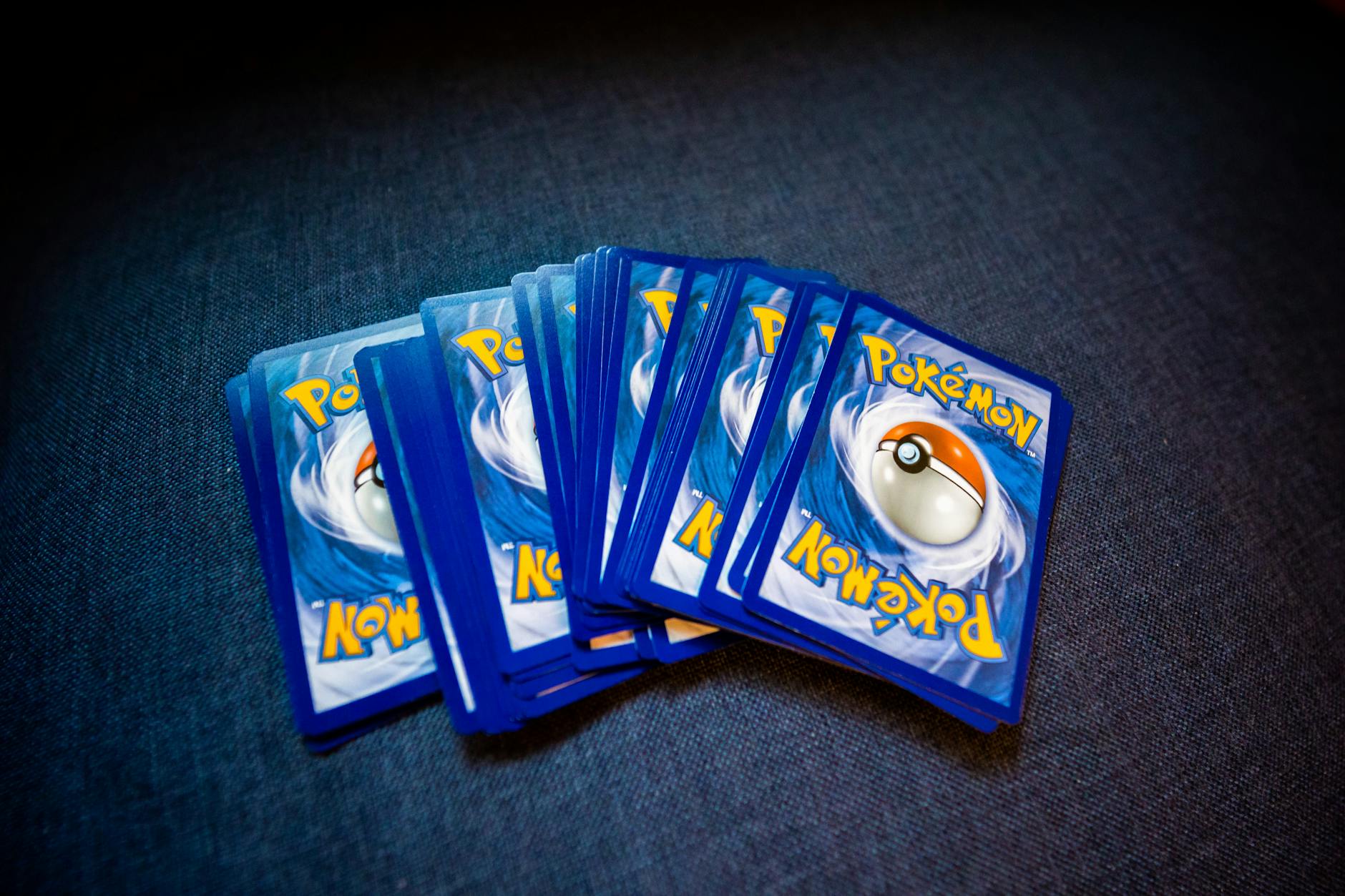
Collector Considerations: Building a Complete Mankey Line Set
Building a comprehensive Mankey evolution collection requires decisions about scope and era focus. A minimalist approach might include one card from each evolutionary stage: any Mankey, any Primeape, and any Annihilape. A maximalist approach could encompass every English printing of each Pokemon across all expansions, a collection numbering well over 100 cards when accounting for reverse holos, promos, and variant printings. The tradeoff between vintage and modern cards affects both cost and availability. Vintage Jungle cards carry nostalgia value and decreasing supply, but most remain affordable outside of graded gem mint copies.
Modern Scarlet & Violet cards offer better artwork variety and special treatments but lack the historical significance. Some collectors specifically avoid mixing eras, maintaining separate vintage and modern binders. One practical consideration involves the Japanese market. Many Mankey and Primeape cards appeared in Japanese sets before their English releases, sometimes with different artwork. Japanese vintage cards often cost less than English equivalents while providing the same artwork appeal. However, mixing languages in a collection creates visual inconsistency that bothers some collectors.
Why the Mankey Line Gained New Relevance
The introduction of Annihilape did more than add a third evolution stage. It brought renewed attention to a Pokemon line that had largely faded from competitive and collector consciousness. Primeape’s final anime appearance involved Ash releasing it to train with a fighting champion, and the Pokemon never returned in any meaningful capacity.
For years, the Mankey line existed primarily as nostalgic filler in the Pokedex. Annihilape changed this trajectory by becoming competitively viable in both VGC (Video Game Championships) and the TCG. Its unique typing and strong stats made it a genuine threat, which in turn increased demand for playable Annihilape cards. This competitive relevance has a trickle-down effect on the entire evolution line, as players need Mankey and Primeape cards to play Annihilape in evolution-based formats.
Future Outlook for Mankey Evolution Collectibles
The Mankey evolution line now occupies an interesting position in Pokemon history. It represents a classic Generation I family that received modern expansion, similar to how Eevee gained additional evolutions across multiple generations. Whether Game Freak will add further evolutions remains speculative, but the precedent exists.
For collectors, this uncertainty adds both risk and opportunity to long-term collection planning. Current market dynamics favor Annihilape cards due to their competitive playability and modern scarcity relative to demand. Vintage Mankey and Primeape cards maintain steady but unspectacular value, appealing primarily to nostalgia collectors and set completionists. As Scarlet & Violet rotates out of standard play formats, Annihilape card values will likely follow typical post-rotation patterns, potentially creating buying opportunities for patient collectors.
Conclusion
The Mankey evolution chain represents 30 years of Pokemon history compressed into three stages. Mankey evolves into Primeape at level 28 through standard leveling, while Primeape evolves into Annihilape after using Rage Fist 20 times and gaining a level. This combination of traditional and unique evolution methods creates distinct gameplay experiences across generations, and the addition of Ghost-typing to Annihilape fundamentally changed the line’s competitive identity.
For collectors, the evolution chain offers entry points at various price levels and eras. Vintage Jungle cards provide affordable nostalgia, while modern Annihilape cards offer competitive relevance and special rarity treatments. Building a complete Mankey line collection requires navigating decisions about era scope, language preferences, and rarity depth. Understanding the evolution mechanics and history behind these Pokemon adds context that enriches any collection.