Understanding are we in a pokemon card bubble now for vintage base set collector’s cards? is essential for anyone interested in Pokemon card collecting and pricing. This comprehensive guide covers everything you need to know, from basic concepts to advanced strategies. By the end of this article, you’ll have the knowledge to make informed decisions and take effective action.
Table of Contents
- What Happened to the Pokemon Card Bubble That Started in 2020?
- Why Vintage Base Set Cards Are Insulated From Modern Market Pressures
- Record Sales Signal Institutional Confidence in Vintage Pokemon
- How the 30th Anniversary Will Likely Affect Vintage Prices
- Risks That Still Apply to Vintage Base Set Collectors
- Portfolio Construction for Serious Vintage Collectors
- Looking Ahead: What the Data Suggests About Future Performance
- Conclusion
What Happened to the Pokemon Card Bubble That Started in 2020?
The pandemic-era Pokemon card boom created genuine bubble conditions. Stimulus checks, lockdown boredom, and influencer-driven speculation pushed prices to irrational levels across all segments of the market. cards that had traded for hundreds of dollars suddenly commanded thousands, and sealed product became virtually impossible to find at retail prices. This was a classic speculative bubble, fueled by FOMO and new entrants who knew little about the hobby’s fundamentals. That bubble has already burst””or more accurately, deflated without catastrophe. The correction happened gradually through 2022 and 2023, shaking out speculators and restoring more rational pricing.
What we’re observing now is not the precursor to a crash but the aftermath of one that already occurred. The market has separated into two distinct segments: modern cards, which remain vulnerable to oversupply and reprint announcements, and vintage cards, which have emerged stronger and more institutionalized than before. The comparison to traditional financial markets is instructive. Pokemon cards have gained 3,800% since 2004, compared to the S&P 500’s 483% return over the same period. While past performance never guarantees future returns, vintage Pokemon cards have established a track record that extends well beyond the 2020 speculation. Base Set booster boxes have achieved a 22.375% compound annual growth rate over 25 years, appreciating from $90 to approximately $114,000. This long-term performance suggests structural demand rather than speculative excess.
Why Vintage Base Set Cards Are Insulated From Modern Market Pressures
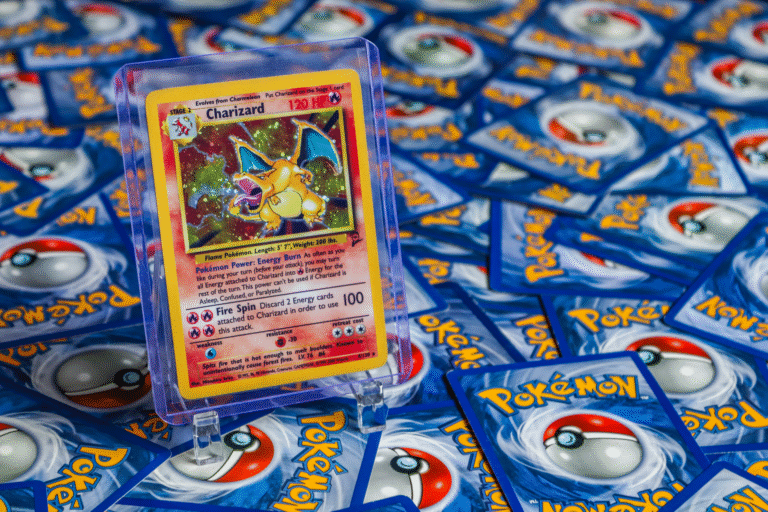
The fundamental difference between vintage and modern pokemon cards comes down to supply. The Pokemon Company cannot print more 1st Edition Base Set Charizards. They can””and do””reprint modern chase cards, often within months of initial release. This creates a permanent scarcity advantage for pre-2003 cards that no amount of market manipulation can overcome. Vintage cards currently hold approximately 90% of the Pokemon card market’s total value despite representing a tiny fraction of cards in circulation. This concentration reflects the premium collectors place on authenticity, nostalgia, and verified scarcity.
PSA 10 specimens of iconic Base Set cards appreciate roughly 20% annually, with the Base Set Charizard PSA 9 specifically rising 37.5% per year according to recent tracking data. only 124 PSA 10 1st Edition Charizards exist out of 4,993 graded, creating genuine rarity that supports sustained price appreciation. However, the vintage market is not without vulnerabilities. If you’re a collector who purchased at peak 2021 prices, you may still be underwater on certain positions. Late entrants who bought during the height of the speculation paid prices that reflected irrational exuberance rather than sustainable demand. The correction has been kind to those who held through it, but those who panic-sold during 2022 locked in real losses. The lesson here is that even fundamentally sound assets can become overpriced, and timing matters even in markets with strong long-term trajectories.
Record Sales Signal Institutional Confidence in Vintage Pokemon
Recent auction results tell a story of increasing institutional legitimacy. The $550,000 1st Edition Charizard PSA 10 sale at Heritage Auctions broke records during a period when skeptics were predicting market collapse. A complete 1st Edition PSA 10 set sold for $911,000, establishing that serious collectors treat these items as legitimate collectibles worthy of six-figure allocations. Heritage Auctions’ involvement is particularly significant. As one of the world’s largest collectibles auction houses, their willingness to feature Pokemon cards alongside fine art, rare coins, and sports memorabilia signals that the hobby has moved beyond its niche origins.
This institutional validation creates a floor under prices that didn’t exist during earlier market cycles. When auction houses with centuries of combined experience take a collectible category seriously, it tends to stay taken seriously. The comparison to sports cards is instructive here. Baseball cards experienced their own bubble in the early 1990s, followed by a prolonged crash that took decades to recover from. But the vintage segment of that market””Mickey Mantle rookies, Honus Wagner T206s””continued appreciating even as junk wax era cards became worthless. Pokemon appears to be following a similar trajectory, with Base Set and other early releases establishing themselves as the hobby’s equivalent of pre-war baseball cards.

How the 30th Anniversary Will Likely Affect Vintage Prices
Pokemon’s 30th anniversary in 2026 represents a significant catalyst for vintage card prices. Analysts project 30-50% price increases for vintage cards as mainstream attention returns to the franchise. Anniversary celebrations typically drive renewed interest from lapsed collectors who experienced the original releases, creating demand spikes that particularly benefit iconic items from the early sets. The Pokemon Company will almost certainly release commemorative products and events that spotlight the franchise’s history. This media attention functions as free marketing for the vintage market, reminding potential buyers that original Base Set cards exist and hold value.
Previous anniversary celebrations have correlated with price increases, and the 30th represents a particularly significant milestone likely to generate substantial coverage. The tradeoff for collectors considering purchases now versus waiting is straightforward. Buying before the anniversary means paying current prices with the expectation of appreciation, but prices may have already incorporated some anniversary expectations. Waiting means potentially paying higher prices but also gaining more certainty about whether the anticipated rally materializes. For collectors focused on personal enjoyment rather than pure investment returns, the timing question matters less than finding cards in acceptable condition at prices that fit their budget.
Risks That Still Apply to Vintage Base Set Collectors
Despite the favorable structural position of vintage cards, standard investment risks apply. Liquidity remains a concern””selling a $100,000 card is not like selling $100,000 of stock. Finding buyers at fair prices can take time, and auction houses charge significant commissions. The market lacks the instant execution and price transparency that characterize regulated financial markets. Condition sensitivity creates additional risk.
A PSA 10 Charizard and a PSA 8 Charizard might look identical to casual observers but differ in value by tens of thousands of dollars. Grading companies occasionally revise standards or make errors, and cards can be damaged during storage, shipping, or handling. The physical nature of the asset creates risks that don’t exist with digital securities. Counterfeiting has become increasingly sophisticated, and while grading services provide authentication, no system is perfect. High-value raw cards should never be purchased without professional authentication, and even graded cards occasionally turn out to have been tampered with or incorrectly authenticated. Collectors should work with established dealers, request detailed provenance information, and be skeptical of prices that seem too good to be true.
Portfolio Construction for Serious Vintage Collectors
Expert recommendations suggest allocating approximately 40% of a Pokemon card portfolio to blue-chip vintage items like Base Set and Neo Series cards in high grades. The remaining allocation might include 30% modern chase cards, 20% undervalued sleepers from overlooked sets, and 10% speculative plays on upcoming releases or less established cards. This diversification acknowledges that even within Pokemon collecting, different segments carry different risk profiles. Vintage blue-chips provide stability and long-term appreciation potential but require significant capital. Modern cards offer more accessible entry points but face reprint risk and faster obsolescence.
The balance between these categories should reflect individual collector goals, risk tolerance, and available capital. For collectors focused specifically on vintage Base Set, the choice between different grades involves meaningful tradeoffs. PSA 10s command substantial premiums but also demonstrate the strongest appreciation rates. PSA 9s offer more accessible pricing while still representing high-quality specimens. Lower grades become increasingly speculative, as the collector base that values condition tends to gravitate toward the highest available grades over time.
Looking Ahead: What the Data Suggests About Future Performance
The global trading card market is projected to reach $58.2 billion by 2034, representing a 13% compound annual growth rate. Pokemon occupies a dominant position within this market, and vintage cards from the Base Set era represent the most established segment of Pokemon collecting. These macro trends support continued appreciation, though individual results will vary based on specific cards, conditions, and market timing.
Vintage Base Set cards have achieved 30-40% compound annual growth rates historically, though such returns are unlikely to continue indefinitely at that pace. As the market matures and prices rise, percentage gains naturally moderate even as absolute dollar appreciation remains significant. Collectors should approach future projections with appropriate skepticism while recognizing that the structural factors supporting vintage card values””fixed supply, nostalgic demand, institutional acceptance””remain firmly in place.
Conclusion
Vintage Base Set Pokemon cards are not in a bubble. The speculative excess of 2020-2022 has already corrected, leaving a market characterized by genuine scarcity, institutional participation, and sustained demand from both nostalgic collectors and serious investors. While modern cards face legitimate headwinds from overproduction and reprint risk, pre-2003 cards occupy a fundamentally different market position that insulates them from these concerns.
This doesn’t mean vintage cards are risk-free investments. Liquidity constraints, condition sensitivity, authentication challenges, and the inherent unpredictability of collectibles markets all apply. Collectors who bought at peak 2021 prices may still be recovering their positions. But for those evaluating whether to enter or expand vintage Base Set positions, the current market represents something closer to a mature collectibles category than a speculative bubble waiting to burst.