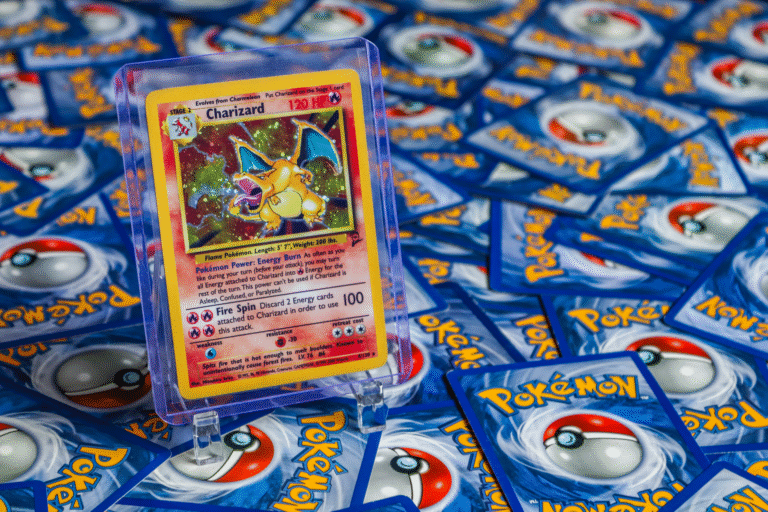
Experienced collectors avoid loose Pokemon packs””those sold individually outside of sealed boxes or cases””primarily because of the widespread practice of pack weighing and searching, which allows sellers to remove packs containing valuable cards before selling the remainder. A sealed booster box contains 36 packs with a statistically distributed chance of hits, but once that box is opened and packs are sold separately, there is no way to verify whether the heavier packs containing holofoil or ultra-rare cards have already been cherry-picked. A collector purchasing a loose pack from a Darkness Ablaze booster box, for example, may unknowingly be buying from a batch where all the packs containing Charizard VMAX pulls have already been identified and removed through weighing.
This risk extends beyond simple weighing to include more sophisticated searching methods, resealing techniques, and the general loss of provenance that comes with any product removed from its original sealed state. While casual collectors buying packs for the fun of opening may accept these odds, serious collectors focused on value preservation and fair odds refuse to gamble on packs with potentially compromised randomness. This article examines the specific methods used to search packs, which eras and products are most vulnerable, how to identify suspicious loose packs, and when purchasing individual packs might still make sense.
Table of Contents
- What Is Pack Weighing and Why Do Collectors Worry About It?
- Which Pokemon Card Products Are Most Vulnerable to Searching?
- How Can You Identify Packs That Have Been Searched or Resealed?
- When Might Buying Loose Packs Still Make Sense?
- What Are the Hidden Risks of Vintage Loose Packs?
- How Modern Set Design Attempts to Counter Pack Searching
- The Future of Pack Security and Collector Trust
- Conclusion
What Is Pack Weighing and Why Do Collectors Worry About It?
Pack weighing exploits a simple manufacturing reality: holofoil and ultra-rare cards weigh more than common cards due to the additional foil layer and sometimes thicker card stock. Using a precision digital scale capable of measuring to 0.01 grams, a seller can identify which packs in a box contain the valuable pulls. A typical modern booster pack weighs around 28-29 grams, but packs containing holofoil rares can weigh 0.3 to 0.5 grams more. After identifying the heavy packs, a seller keeps those for personal collection or premium resale while offloading the lighter packs to unsuspecting buyers at standard retail prices. The economics make this practice attractive for unscrupulous sellers.
A booster box of Evolving Skies costs roughly $140 at retail and contains approximately four to six ultra-rare pulls on average. If a seller can identify and remove just the two or three packs containing alternate art cards worth $50-200 each, they can sell the remaining 33 packs at $4-5 each, recovering their initial investment while keeping cards worth potentially hundreds of dollars. The buyer receives packs with dramatically reduced odds””not the roughly one-in-six chance of a hit that sealed box odds would suggest, but closer to zero for meaningful pulls. This practice has existed since the early days of the hobby but became more refined as digital scales became inexpensive and widely available. Vintage packs from base Set, Jungle, and Fossil are particularly vulnerable because the weight differential between holofoil and non-holofoil packs is significant and well-documented. Modern sets have attempted to address this through code cards and varying pack compositions, though determined searchers continue to find exploitable patterns.
- —

Which Pokemon Card Products Are Most Vulnerable to Searching?
Vintage packs from 1999-2003 represent the highest-risk category for pack searching. Wizards of the Coast era products had no countermeasures against weighing, and the weight differences are substantial enough that a holofoil pack can be identified with near certainty. A light Base Set Unlimited pack essentially guarantees no holofoil rare, making the $200+ price tag for such packs unjustifiable for anyone hoping to pull a Charizard. For this reason, serious vintage collectors almost universally insist on sealed booster boxes, cases, or graded packs verified by authentication services. Modern Sword & Shield and Scarlet & Violet era packs implemented code cards with varying thicknesses to obscure weight differences, but this countermeasure has limitations. After several months on the market, the collecting community typically documents the weight patterns for each set, including which code card variants correspond to different pull rates.
For example, green code cards in some sets indicate non-holofoil packs while white code cards signal holofoil possibilities””information that can be determined through light manipulation of the pack wrapper without opening it. However, certain products resist searching more effectively than others. Elite Trainer Boxes contain packs from production runs sometimes separate from standard booster box packs, and their sealed nature provides some assurance. Blister packs with cardboard backing prevent easy weighing and light searching, though they can still be opened and resealed with practice. Three-pack blisters with a visible promo card add another layer of verification since tampering with the packaging is more apparent. Collectors who must buy individual packs often prefer blistered products for this added security, accepting the premium price as insurance against searching.
- —
How Can You Identify Packs That Have Been Searched or Resealed?
Identifying searched or resealed packs requires careful inspection of packaging details that differ between factory-sealed and tampered products. Factory seals on booster packs have a specific crimping pattern along the top and bottom edges””the crimps should be uniform, evenly spaced, and show no signs of heat damage or re-application. A pack that has been opened and resealed often displays irregular crimping, slightly melted plastic near the seal edges, or a tighter-than-normal wrapper from shrinkage during the resealing process. The pack wrapper itself provides additional clues.
Factory-fresh packs have a subtle texture to the plastic and minimal static cling to the cards inside, while resealed packs often use replacement wrappers that feel different or generic heat-shrink plastic that pulls tighter and appears more glossy. Holding the pack at an angle under good lighting can reveal whether the wrapper has been replaced””original wrappers have consistent printing registration and holographic patterns that counterfeit wrappers rarely replicate perfectly. For blister packs and larger products, check the cardboard backing for puncture holes (used to extract packs without opening the main seal), examine glue residue patterns around seals, and look for price stickers that might hide tampering evidence underneath. One common red flag is finding loose packs at significant discounts or in unusual quantities from sellers without established reputations. A seller offering fifty individual booster packs from the same set at below-retail prices almost certainly weighed them first””no rational seller would leave money on the table by selling random packs at a loss when they could verify and retain the valuable ones.
- —

When Might Buying Loose Packs Still Make Sense?
Despite the risks, certain scenarios make loose pack purchases defensible for informed collectors. Purchasing directly from major retailers who open sealed cases and sell individual packs at checkout””stores like Target, Walmart, or local game shops receiving direct distributor shipments””offers reasonable assurance that packs have not been searched. The high volume and direct supply chain makes systematic searching impractical, though even retail environments occasionally see employees or customers tampering with products. The comparison between buying loose packs for fun versus sealed product for investment reveals a fundamental divide in collecting philosophy. A parent buying a few packs for a child’s birthday accepts the recreational gambling aspect and does not expect guaranteed value””the $5 per pack is entertainment spending, not portfolio allocation.
A serious collector building a long-term collection treats sealed booster boxes as the minimum viable unit for fair odds, recognizing that the premium over per-pack pricing represents the cost of provenance verification. The tradeoff becomes quantifiable when examining expected value calculations. A sealed Evolving Skies booster box at $180 offers 36 packs with full randomization, working out to $5 per pack with guaranteed untampered odds. Loose packs from the same set might cost $6-8 each from secondary sellers, meaning collectors pay more for inferior odds””a mathematically indefensible proposition unless the packs come from a verified sealed source. Some collectors specifically purchase packs from freshly opened boxes on livestream to combine the fun of pack opening with reasonable assurance of authenticity, though even this approach depends entirely on trusting the streamer.
- —
What Are the Hidden Risks of Vintage Loose Packs?
The vintage loose pack market carries risks beyond simple weighing that experienced collectors have learned through costly lessons. Resealing technology has advanced to the point where even expert collectors struggle to distinguish authentic vintage packs from sophisticated fakes. Counterfeiters purchase inexpensive vintage common cards, create replica wrappers using high-resolution scans and specialty printing, and produce packs that pass casual inspection. These fakes sometimes contain real vintage cards to add weight and feel, making the deception harder to detect. Authentication services like CGC and PSA now grade sealed packs, providing some protection for high-value vintage items. However, the grading process itself has limitations””authenticators examine external characteristics and cannot verify the pack contents without opening them, meaning a cleverly resealed pack could theoretically receive a high grade while containing replaced or searched contents.
The authentication provides reasonable assurance but not absolute certainty, a distinction that matters significantly at price points where single Base Set packs command four figures. The provenance problem compounds over time. A 1999 booster pack has potentially changed hands dozens of times over 25+ years, with each transaction representing an opportunity for tampering. Collections that sat unopened in closets for decades offer the most trustworthy sources, but verifying such provenance requires documentation that rarely exists. Estate sales, storage unit finds, and similar discoveries provide narratives that sound compelling but cannot be independently verified””and sellers understand that a good story adds value, creating incentive to fabricate provenance. For vintage loose packs, the only truly safe assumption is that if a pack is light and loose, it has been weighed; if a pack is heavy and loose at a reasonable price, something else is probably wrong.
- —

How Modern Set Design Attempts to Counter Pack Searching
The Pokemon Company has implemented evolving countermeasures to address pack searching, though each solution creates new considerations for collectors. The code card system introduced in Black & White era sets added deliberate weight variation through different card thicknesses, making simple weighing less reliable.
Modern sets continue this approach with code cards that vary not only in weight but in color and design, theoretically randomizing the relationship between pack weight and contents. Recent Scarlet & Violet sets have experimented with pack structures that place ultra-rares in positions where weight distribution feels similar to common-only packs, and some products include guaranteed holofoils in every pack to eliminate the holofoil-versus-no-holofoil weight binary that earlier sets exhibited. These changes help but do not eliminate searching entirely””within weeks of each new set’s release, the collecting community maps out whatever patterns exist, and sophisticated searchers adapt their methods accordingly.
- —
The Future of Pack Security and Collector Trust
The ongoing tension between searching methods and countermeasures will likely continue as long as sealed product randomization creates exploitable information asymmetries. Some collectors advocate for tamper-evident packaging similar to pharmaceutical products, where any opening becomes visually obvious and irreversible. Others suggest blockchain-based provenance tracking from factory to consumer, though implementation costs and complexity make this unlikely for mass-market products.
More realistically, the market is self-correcting toward sealed product premiums that price in searching risk. Loose vintage packs trade at discounts reflecting their compromised status, while sealed boxes and cases command premiums that increase with each year of verifiable provenance. For collectors prioritizing value and fair odds, the lesson remains straightforward: sealed product from reputable sources represents the only defensible approach, and the premium paid for that assurance is not a luxury but a necessity.
- —
Conclusion
Experienced Pokemon collectors avoid loose packs because the fundamental economics of pack searching make it irrational to trust individually sold packs. Any seller with access to a precision scale can identify and retain valuable packs while selling the remainder, transforming what should be random chance into a rigged proposition.
Vintage packs without any searching countermeasures are especially compromised, but even modern sets with code card variations remain vulnerable to determined searchers who map the patterns. The practical response for collectors is clear: treat sealed booster boxes as the minimum unit for fair odds, prefer blistered or otherwise tamper-resistant products when buying individual packs, purchase from major retailers with direct supply chains, and apply extreme skepticism to loose packs from secondary market sellers regardless of price or stated provenance. The premium for sealed product is not overhead””it is the cost of participating in a fair lottery rather than one where the valuable tickets have already been removed.