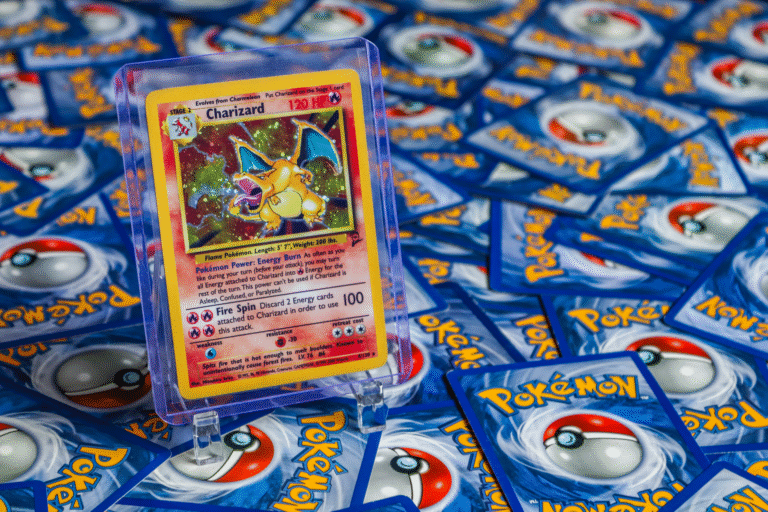
The question itself contains a common misconception: the 21-gram threshold does not apply to blister packs at all. A Pokemon Base Set blister pack weighing under 21 grams would indicate a damaged or incomplete product, not a “light” pack without a holographic card. The 21-gram cutoff specifically refers to loose booster packs removed from their retail packaging, where heavy packs at 21.00 grams or more are likely to contain a holo, while those below this weight typically do not. Blister packs””the retail packaging that holds a booster pack behind a plastic bubble attached to cardboard””weigh significantly more than their loose counterparts.
The cardboard and plastic packaging adds approximately 12 or more grams to the total weight, putting heavy blister packs in the 33-gram range and above. For example, Shadowless Long Crimp blister packs with likely holos have been documented weighing between 33.90 and 34.29 grams. So if you are holding a blister pack and trying to determine holo odds, you need an entirely different mental framework than the 21-gram rule. This article breaks down the actual weight thresholds for both pack types, explains why blister packs command premium prices in the market, and provides practical guidance for collectors trying to assess their sealed product.
Table of Contents
- What Is the 21-Gram Threshold for Pokemon Base Set Packs?
- Why Blister Pack Weight Ranges Differ Significantly
- Understanding the Light Threshold for Blister Packs
- How Pack Weighing Affects Market Prices
- Common Mistakes When Weighing Vintage Pokemon Packs
- Why Blister Pack Condition Affects Weight Readings
- The Future of Pack Weighing in the Pokemon Market
- Conclusion
What Is the 21-Gram Threshold for Pokemon Base Set Packs?
The 21-gram standard emerged from years of collector research into loose pokemon base Set booster packs. When a pack hits 21.00 grams or heavier, it falls into the “heavy” category, meaning the odds favor it containing a holographic rare card. The logic is straightforward: holographic cards weigh slightly more than their non-holo counterparts due to the foil layer, and this difference””while small””is detectable on a precise scale. The typical weight range for heavy loose packs spans from 20.8 grams to 21.8 grams, with meaningful gradations within that spectrum. Packs weighing above 21.4 grams are considered a safe bet for containing a holo, while those in the 21.2 to 21.3 gram range offer good to great odds.
Once you drop below 21.1 grams, the results become unpredictable. A pack at 20.9 grams might contain a holo, but the probability drops considerably compared to heavier examples. For practical comparison, consider two loose Base Set packs on a scale: one reads 21.5 grams and the other reads 20.7 grams. The first pack carries strong odds of yielding a Charizard, Blastoise, or one of the other sought-after holos, while the second likely contains a non-holo rare such as Electrode or Poliwrath. This weight difference of less than a gram represents the entire margin collectors use to predict pack contents.

Why Blister Pack Weight Ranges Differ Significantly
Blister packs exist in an entirely separate weight class because the retail packaging itself contributes substantial mass. The cardboard backing, plastic blister bubble, and any additional promotional materials or price tags all factor into the total. Heavy blister packs””those likely containing holos””typically weigh over 33 grams, a full 12 grams or more above the loose pack threshold. However, this is where weighing becomes problematic. Unlike loose booster packs, which are relatively consistent in their packaging weight, blister materials varied between production runs, retail chains, and even individual units.
One blister’s cardboard might be slightly thicker than another, or the plastic bubble might use marginally more material. These small inconsistencies compound to make the weight readings less reliable. A blister pack at 33.2 grams might be light (no holo) with heavy packaging, or it could be heavy (contains holo) with lighter-than-average packaging. This uncertainty is precisely why sealed blister packs command premium prices in the vintage Pokemon market. Since weighing them produces less definitive results than weighing loose packs, buyers willing to pay for blisters accept genuine randomness””something that has largely been eliminated from the loose pack market through decades of careful sorting.
Understanding the Light Threshold for Blister Packs
If 21 grams marks the division for loose packs, where does that line fall for blisters? Based on documented weights, the equivalent “light” threshold for blister packs sits approximately between 32.1 and 32.5 grams. A blister pack weighing less than this range almost certainly does not contain a holographic card, assuming the packaging is intact and complete. The challenge is that this range is less precise than the loose pack equivalent. With loose packs, a reading of 20.8 grams versus 21.2 grams provides meaningful information.
With blisters, the same 0.4-gram difference might be entirely attributable to packaging variation rather than card content. Collectors who weigh blister packs need to account for this uncertainty and should not expect the same confidence levels they achieve with loose product. One documented example illustrates the upper range: shadowless Long Crimp blister packs containing holos weighed between 33.90 and 34.29 grams. This suggests that for this particular blister variant, anything above roughly 33.5 grams offers reasonable holo odds, while packs below 33 grams become increasingly unlikely to contain foil cards.
How Pack Weighing Affects Market Prices
The ability to weigh packs has fundamentally altered the vintage Pokemon market. Loose Base Set packs sold today are almost universally pre-weighed by sellers, with heavy packs commanding substantial premiums. A heavy loose pack might sell for two to three times what a light pack fetches, reflecting the near-certainty of holo contents versus the near-certainty of a non-holo rare. Blister packs occupy an interesting middle ground.
Because they are harder to weigh accurately, they retain more of their original randomness, which some collectors value. A sealed blister represents the closest thing to a genuine “mystery” pull that the vintage market still offers. This authenticity of chance””combined with the display appeal of original retail packaging””drives blister prices well above loose pack equivalents, even when accounting for the weighing uncertainty. The tradeoff is clear: buyers seeking maximum value per dollar should focus on heavy loose packs, where the holo is essentially guaranteed. Buyers seeking the experience of genuine uncertainty, or who value the sealed retail presentation, pay a premium for blister packs while accepting that their 33-gram pack might not contain the chase card they hope for.
Common Mistakes When Weighing Vintage Pokemon Packs
The most frequent error collectors make is applying the wrong threshold to the wrong product type. Someone who learns that “21 grams means a holo” and then weighs a blister pack at 32 grams might incorrectly assume they have a heavy pack, when in reality 32 grams likely indicates a light blister. Conversely, a damaged or opened blister might weigh close to the loose pack range, leading to confusion about which standards apply. Scale precision matters more than many collectors realize. A kitchen scale accurate to one gram is functionally useless for this purpose. Pack weighing requires a scale accurate to at least 0.1 grams, and ideally 0.01 grams.
The difference between a 21.0-gram pack and a 20.9-gram pack is the difference between good holo odds and uncertain odds””a measurement a standard kitchen scale cannot reliably make. Environmental factors also introduce error. A pack that absorbed humidity might weigh slightly more. A pack stored in extremely dry conditions might weigh less. While these variations are typically small, they fall within the margin that matters for pack sorting. Collectors weighing valuable vintage product should use consistent conditions and calibrated equipment.
Why Blister Pack Condition Affects Weight Readings
A blister pack in poor condition may produce misleading weight readings that do not reflect card contents. If the plastic bubble has separated from the cardboard, if stickers or price tags have been removed, or if any packaging material is torn or missing, the baseline weight changes in unpredictable ways.
For example, a heavy blister pack that originally weighed 34.1 grams might read 33.4 grams after losing a retail price sticker and experiencing some cardboard damage. That altered reading falls into the ambiguous zone where holo presence becomes uncertain””not because the cards changed, but because the packaging did. Collectors evaluating blister packs should always assess physical condition alongside weight data.
The Future of Pack Weighing in the Pokemon Market
As the supply of vintage sealed product continues to dwindle, the weighing question becomes less practically relevant and more historically interesting. Most loose Base Set packs have already been sorted, leaving the market divided into clearly heavy and clearly light inventory.
Blister packs remain one of the few categories where genuine uncertainty persists, which may increase their collector appeal over time. Authentication services have begun grading sealed packs and blister packs, adding another layer of verification to the market. While these services do not typically disclose pack weights, their authentication processes help ensure that blisters have not been tampered with or resealed””concerns that become more significant as prices rise.
Conclusion
The 21-gram threshold applies exclusively to loose Pokemon Base Set booster packs, not blister packs. A blister under 21 grams would indicate physical damage or missing components, as the packaging alone adds more than 12 grams to the total weight. For blister packs, the relevant heavy threshold sits above 33 grams, with documented examples of holo-containing Shadowless Long Crimp blisters weighing between 33.90 and 34.29 grams.
Collectors should approach pack weighing with the correct standards for each product type and realistic expectations about accuracy. Loose packs offer reliable sorting at the 21-gram cutoff, while blister packs introduce packaging variability that makes weighing less precise. This inherent uncertainty in blisters contributes to their market premium and preserves an element of genuine chance that has largely disappeared from loose vintage packs.