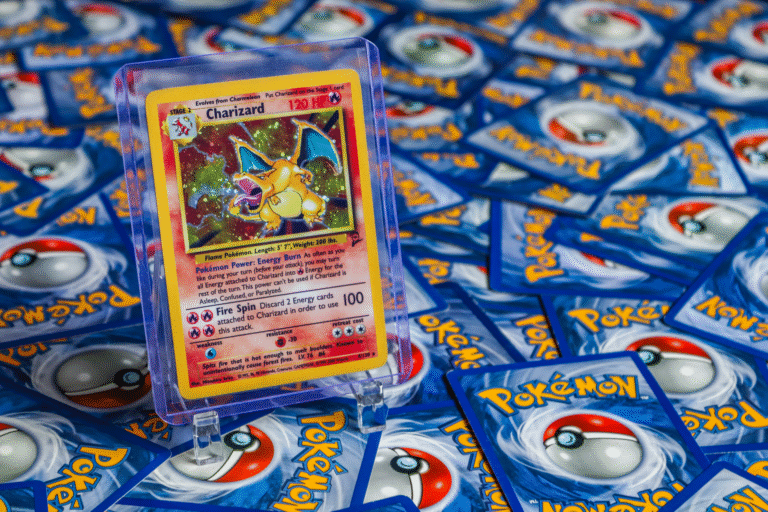
The value of a Charizard Base Set PSA 4 with minor creasing and play wear typically ranges from $350 to $550 in the current market, though prices fluctuate based on specific condition factors, market timing, and whether the card is shadowless or unlimited. This price point represents a significant entry opportunity for collectors who want to own the most iconic Pokemon card ever printed without spending thousands on higher-grade examples. Understanding exactly what determines value at this grade level helps both buyers and sellers make informed decisions in an often confusing marketplace. The Base Set Charizard occupies a singular position in the trading card world. First released in January 1999 as part of the original Pokemon TCG launch in North America, this holographic fire-type immediately became the chase card of a generation.
A PSA 4, classified as “VG-EX” or Very Good to Excellent, sits in the lower-middle tier of the ten-point grading scale. Cards at this grade exhibit noticeable wear that is visible upon inspection but retain enough structural integrity and visual appeal to satisfy collectors seeking authentic vintage pieces. Minor creasing and play wear are common characteristics at this grade, reflecting the reality that most Base Set cards were handled by children during the peak Pokemon craze of the late 1990s. This guide breaks down every factor that influences the value of a PSA 4 Charizard Base Set, from understanding what the grade actually means to navigating the differences between shadowless and unlimited printings. By the end, readers will have a complete framework for evaluating these cards, whether looking to purchase their first graded Charizard or determining fair market value for a card already in their collection. The information here reflects current market realities and historical pricing patterns that help predict future movements.
Table of Contents
- How Much Is A Charizard Base Set PSA 4 Worth In Today’s Market?
- Understanding PSA 4 Grade Standards And What Minor Creasing Means
- Shadowless Versus Unlimited Base Set Charizard Value Differences
- Where To Buy And Sell A PSA 4 Charizard Base Set For Fair Value
- Common Issues That Affect Charizard Base Set PSA 4 Pricing
- Investment Potential Of Lower-Grade Vintage Charizards
- How to Prepare
- How to Apply This
- Expert Tips
- Conclusion
- Frequently Asked Questions
How Much Is A Charizard Base Set PSA 4 Worth In Today’s Market?
A PSA 4 charizard Base Set unlimited typically sells between $350 and $450 at auction, while the rarer 1st Edition Shadowless version commands $2,500 to $4,000 at the same grade. The non-1st Edition Shadowless variant falls in between, generally fetching $600 to $900. These figures represent completed sales data from major auction platforms rather than listing prices, which often skew higher due to optimistic sellers. The market has stabilized considerably since the speculative bubble of 2020-2021, when pandemic-era demand pushed all Pokemon prices to unsustainable highs. Several factors explain why the PSA 4 grade occupies an interesting market position. Collectors on a budget recognize that the visual difference between a PSA 4 and a PSA 5 or 6 can be subtle when the card is encased in a PSA holder.
The plastic slab protects the card from further damage while still allowing display, making lower grades more appealing than raw cards with similar wear. Additionally, the supply of PSA 4 examples is relatively robust compared to higher grades, which keeps prices accessible. Market timing also plays a role. Prices tend to spike during the holiday shopping season and whenever Pokemon-related media generates nostalgia, such as anniversary celebrations or new game releases. Sales typically slow during summer months and early spring. Tracking completed auction data over several weeks provides a more accurate picture than relying on a single comparable sale.
- Unlimited Base Set PSA 4: $350-$450 average sale price
- Shadowless (non-1st Edition) PSA 4: $600-$900 average sale price
- 1st Edition Shadowless PSA 4: $2,500-$4,000 average sale price
- UK/European Base Set PSA 4: $300-$400 average sale price
Understanding PSA 4 Grade Standards And What Minor Creasing Means
psa defines a grade 4 as “VG-EX” and allows for noticeable surface wear, light scratching on the holographic area, minor creasing, and slightly rounded corners. The key distinction from lower grades is that the card must still present reasonably well despite these flaws. A PSA 4 Charizard will show clear evidence of handling but should not have major structural damage like heavy creases that break the surface, water damage, or significant paper loss. The card’s centering can be off but typically not so severely that major portions of the border are missing or asymmetrical beyond recognition. Minor creasing at the PSA 4 level usually means one or two small creases that do not severely impact the card’s appearance when viewed in the holder. These might be corner creases, light horizontal lines across the top or bottom, or small diagonal marks from improper storage.
The holographic surface may show light scratches visible under direct light but should still display the iconic artwork clearly. Play wear encompasses edge whitening, minor nicks along the borders, and surface scuffs from shuffling and gameplay. All of these characteristics are consistent with how most Base Set cards were treated during their original circulation. Understanding these standards helps buyers know what to expect when purchasing sight-unseen from auction listings. PSA provides consistency in grading, though some subjectivity exists. Two PSA 4 Charizards may look noticeably different from each other, with one appearing close to a 5 and another sitting at the low end of the grade. Experienced collectors examine holder photos carefully before purchasing, looking for specific flaws that affect visual appeal beyond what the grade number indicates.
- Surface wear and light scratching are expected at this grade
- One to two minor creases are typical for PSA 4 classification
- Corner wear ranging from light to moderate is acceptable
- Centering issues up to 65/35 or worse are possible
- The holographic foil should remain largely intact with visible pattern
Shadowless Versus Unlimited Base Set Charizard Value Differences
The Base Set Charizard exists in three distinct English print variations, and understanding these differences is essential for accurate valuation. The 1st Edition shadowless print, identifiable by the “Edition 1” stamp on the left side of the card and the absence of a drop shadow behind the artwork box, represents the earliest and most valuable version. The non-1st Edition Shadowless lacks the stamp but shares the same printing characteristics, making it the second print run. The Unlimited version, by far the most common, features a visible drop shadow and was printed in massive quantities throughout 1999 and into early 2000. At the PSA 4 level, these distinctions create dramatic price gaps. A 1st Edition Shadowless PSA 4 might sell for ten times what an Unlimited version brings, despite both cards receiving the identical grade. This premium reflects scarcity combined with collector preference for the original print run.
Shadowless cards were produced for a relatively brief window before Wizards of the Coast updated the printing process, resulting in a limited supply that cannot increase. The Unlimited print run was substantial, ensuring a steady supply of gradeable examples even decades later. Identifying these versions requires attention to specific details. The drop shadow appears as a thin dark line along the right side and bottom of the illustration box. On Shadowless prints, the border appears to sit flush against the artwork area. The 1st Edition stamp is unmistakable when present. PSA labels clearly indicate which version was graded, eliminating guesswork for authenticated cards. For raw cards, verification requires close inspection, and counterfeits of the more valuable variations do exist.
- 1st Edition Shadowless: Most valuable, identified by edition stamp and no drop shadow
- Shadowless (non-1st): Second print run, no edition stamp, no drop shadow
- Unlimited: Most common, features visible drop shadow behind artwork frame
- All three versions share identical artwork and card text
Where To Buy And Sell A PSA 4 Charizard Base Set For Fair Value
Multiple platforms facilitate the buying and selling of graded Pokemon cards, each with distinct advantages and fee structures. eBay remains the largest marketplace, offering high visibility and a robust completed sales history that helps establish fair market value. Auction-style listings typically achieve stronger results than fixed-price offerings because competitive bidding can push prices above expected levels. However, eBay’s combined seller fees and payment processing costs approach 15%, which sellers must factor into their net proceeds. Specialized platforms like PWCC, Goldin, and Heritage Auctions cater to the collectibles market and often attract serious buyers willing to pay premiums for authenticated items. These venues work best for higher-value cards, where their fees become proportionally more reasonable.
For a PSA 4 Unlimited Charizard, the cost of consigning to a major auction house may not justify the potential price improvement over eBay. PWCC’s marketplace and vault system offers a middle ground, allowing graded cards to trade hands without physical shipping between transactions. The platform choice depends on priorities. Sellers seeking maximum value with patience should consider eBay auctions timed to end on Sunday evenings when bidding activity peaks. Those wanting quick sales with minimal hassle might prefer Facebook groups or local shops despite lower returns. Buyers benefit from monitoring multiple platforms simultaneously, as pricing inconsistencies create opportunities. Setting up saved searches and price alerts helps catch undervalued listings before competition notices them.
- eBay: Largest audience, approximately 13-15% total fees, strong price transparency
- PWCC Marketplace: Collector-focused, lower fees for vault-stored cards, competitive bidding
- TCGPlayer: Better for raw cards, growing graded market presence
- Facebook Groups: Lower fees but higher scam risk, requires due diligence
- Local Card Shops: Immediate payment but typically offer 60-70% of market value
Common Issues That Affect Charizard Base Set PSA 4 Pricing
Beyond the grade itself, specific characteristics within a PSA 4 population can shift values meaningfully. Centering represents one of the most visible factors. A PSA 4 with near-perfect centering looks significantly more attractive than one with heavy left-right or top-bottom misalignment, even though both received the same grade. Collectors often pay premiums for well-centered examples at lower grades, recognizing that the centering issue alone might have prevented a higher classification. Examining holder photos for centering should be standard practice before purchasing. The nature and location of defects also matter. A crease running through Charizard’s face or the holographic flame area detracts more from visual appeal than edge creasing along the top border. Surface scratches on the holo pattern stand out more than scratches confined to the yellow border areas.
Whitening on corners and edges is expected but varies in severity. Some PSA 4 cards show minimal corner wear with more significant surface issues, while others display the opposite pattern. Understanding which flaws bother you most helps filter the available population. Population reports provide context for scarcity at each grade level. PSA has graded over 45,000 Unlimited Base Set Charizards across all grades, with PSA 4 representing a substantial portion of that total. The 1st Edition population is much smaller, with fewer than 3,000 total graded examples. These numbers help explain pricing differentials and suggest that Unlimited PSA 4 cards are unlikely to become scarce. Collectors should consider whether scarcity matters to their goals or if simply owning the card provides sufficient satisfaction.
- Heavy centering issues reduce appeal despite not affecting the grade
- Creases through the artwork area decrease desirability more than edge creases
- Holographic scratching visibility varies dramatically between examples
- Corner wear patterns differ between otherwise identically graded cards
- Print defects like ink spots or roller lines may be present

Investment Potential Of Lower-Grade Vintage Charizards
The question of whether a PSA 4 Charizard represents a good investment defies simple answers. Lower-grade vintage cards have historically appreciated at slower rates than their gem mint counterparts during bull markets but also experienced less dramatic declines during corrections. The 2020-2021 speculation period saw PSA 10 Charizards reach six figures before crashing significantly, while PSA 4 examples rose and fell in less dramatic fashion. This relative stability appeals to collectors who want exposure to iconic cards without the volatility of high-grade chase items.
Several factors support long-term value retention at the PSA 4 level. The card represents an irreplaceable piece of gaming and cultural history that resonates across generations. Supply cannot increase since Base Set production ended decades ago, and cards that might otherwise enter the market often receive damage that pushes them below gradeable condition. Demand remains consistent from nostalgic millennials and new collectors discovering Pokemon through various media. While no one can predict future markets with certainty, the fundamentals supporting vintage Charizard value appear durable.
How to Prepare
- Research recent completed sales by searching eBay’s sold listings for “Charizard Base Set PSA 4” and filtering by the specific version you’re interested in. Document at least ten recent sales with final prices and dates to establish a current market range. Ignore listings that ended without bids or were relisted, as these represent failed pricing attempts rather than actual market data.
- Verify card authenticity by examining PSA holder characteristics if buying, including the label format, case quality, and certification number. Search the certification number on PSA’s website to confirm it matches the card description and grade shown. For selling, ensure your card is genuinely graded and not housed in a counterfeit holder, which has become an increasing problem.
- Assess condition within grade by examining high-resolution photos for centering, crease locations, surface scratches, and corner wear. Determine whether the specific example sits at the high or low end of the PSA 4 spectrum. Request additional photos from sellers if listing images are insufficient, as reputable sellers accommodate reasonable requests.
- Calculate true costs including platform fees, shipping, and insurance for both buying and selling scenarios. A card listed at $400 will cost the buyer $420-450 after shipping and any applicable taxes, while a seller might net only $340-350 after fees. Understanding these numbers prevents overpaying and helps set appropriate price expectations.
- Choose optimal timing by considering market seasonality and any upcoming Pokemon-related events that might temporarily inflate prices. Selling before major anniversaries or media releases can capitalize on anticipation, while buying during traditionally slow periods may yield better deals.
How to Apply This
- Set price alerts on eBay, PWCC, and other platforms using saved searches with notifications to catch underpriced listings quickly. The best deals typically sell within hours of posting, requiring immediate action.
- Compare across platforms before purchasing since the same card might be listed at significantly different prices on various marketplaces. Check Facebook groups, Reddit trading communities, and auction houses in addition to the primary platforms.
- Negotiate when appropriate, particularly for fixed-price listings that have been active for several weeks. Many sellers will accept 10-15% below asking price rather than continue waiting, especially on platforms with built-in offer functionality.
- Document everything with timestamped photos when receiving cards and keep all shipping materials until verifying the card matches its description. This evidence proves essential for dispute resolution if problems arise.
Expert Tips
- Request photos of the card outside the holder before purchasing from individual sellers, as glare on the case often obscures defects. Trustworthy sellers accommodate this request.
- Focus on visual appeal over strict grade adherence when collecting for personal enjoyment. A sharp-looking PSA 4 provides more satisfaction than a technical PSA 5 with distracting flaws.
- Consider crossover potential if purchasing cards that appear under-graded. Some PSA 4 cards might achieve PSA 5 or CGC 5 upon resubmission, though this gamble requires understanding grading nuances.
- Build relationships with reputable sellers for future purchasing opportunities. Established buyers often receive first access to new inventory and occasional discounts.
- Store graded cards properly in climate-controlled environments away from direct sunlight. While the holder provides protection, UV exposure and temperature fluctuations can affect long-term presentation.
Conclusion
The value of a Charizard Base Set PSA 4 with minor creasing and play wear reflects a balance between iconic status and accessible pricing. At $350-550 for Unlimited versions and higher for Shadowless variants, this grade level offers genuine vintage Pokemon ownership without requiring thousands of dollars. Understanding the factors that influence value within this grade allows both buyers and sellers to transact confidently, recognizing that specific condition characteristics matter as much as the grade number itself.
This card represents more than monetary value for most collectors. It connects them to childhood memories, represents a piece of gaming history, and provides an entry point into serious Pokemon collecting. Whether purchasing a PSA 4 Charizard as the centerpiece of a modest collection or as a stepping stone toward higher grades, the knowledge contained in this guide ensures informed decision-making. The market will continue evolving, but the fundamental appeal of owning a graded Base Set Charizard transcends temporary price fluctuations.
Frequently Asked Questions
How long does it typically take to see results?
Results vary depending on individual circumstances, but most people begin to see meaningful progress within 4-8 weeks of consistent effort. Patience and persistence are key factors in achieving lasting outcomes.
Is this approach suitable for beginners?
Yes, this approach works well for beginners when implemented gradually. Starting with the fundamentals and building up over time leads to better long-term results than trying to do everything at once.
What are the most common mistakes to avoid?
The most common mistakes include rushing the process, skipping foundational steps, and failing to track progress. Taking a methodical approach and learning from both successes and setbacks leads to better outcomes.
How can I measure my progress effectively?
Set specific, measurable goals at the outset and track relevant metrics regularly. Keep a journal or log to document your journey, and periodically review your progress against your initial objectives.
When should I seek professional help?
Consider consulting a professional if you encounter persistent challenges, need specialized expertise, or want to accelerate your progress. Professional guidance can provide valuable insights and help you avoid costly mistakes.
What resources do you recommend for further learning?
Look for reputable sources in the field, including industry publications, expert blogs, and educational courses. Joining communities of practitioners can also provide valuable peer support and knowledge sharing.