Do Pokémon Cards Compete With Gold as a Store of Value?
People often think of gold bars or coins as the ultimate way to store wealth over time. They hold value through wars, recessions, and inflation because everyone trusts them as a safe haven. But could Pokémon cards pull off the same trick? Let’s break it down simply for collectors eyeing prices on sites like PokémonPricing.com.
Gold shines as a store of value for a few big reasons. It has thousands of years of history as money. Central banks stockpile it. Supply stays limited since mining gets harder each year. Demand comes from jewelry, tech, and investors worldwide. Prices might dip short-term but climb long-term, often beating inflation by 1-2% yearly on average.
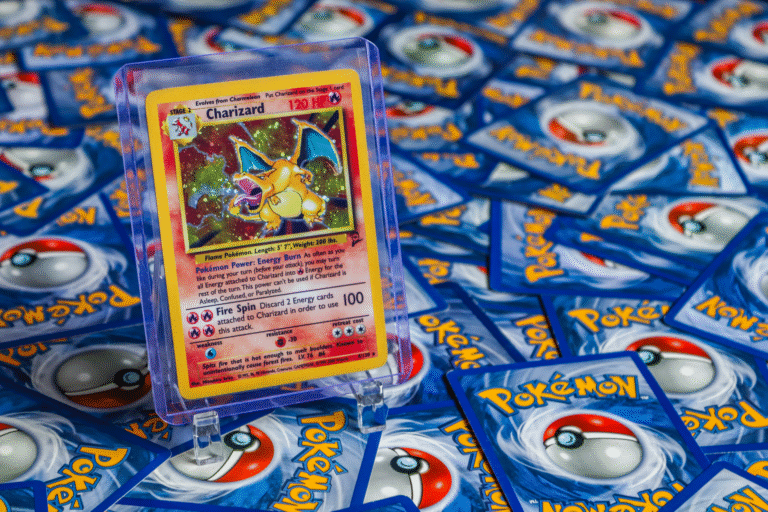
Pokémon cards grab attention with wild price swings. Take gold-themed cards like Gold Stars or Shining Pokémon. A raw Gold Star in good shape might cost $100 to $500. Get it graded PSA 9 or 10, and it jumps to $2,000 up to $25,000 or more, depending on the character and rarity. Event promo cards can hit $10,000 to over $100,000. Modern gold foil commons? Just $5 to $20 ungraded. These numbers come from 2024 market snapshots, showing huge upside for rare stuff.
Sealed products like booster boxes act more like gold for investors. Evolving Skies boxes went from about $1,000 a year ago to peaks near $2,600, now around $2,250. Brilliant Stars climbed 128% in a year, from $217 to nearly $500. Pala Evolved gained 135%, sitting at $370 after peaking at $470. Vintage cards and sealed wax provide stability, much like gold’s steady demand. Experts call vintage your “blue chip” holdings that weather market dips.
But here’s where Pokémon cards fall short against gold. Volatility hits hard. Hype-driven chase cards crash fast. Drop $500 on a hot single at peak, and it tanks in weeks. Mass-produced gold foils often stay under $50 unless perfectly graded. Gold never floods the market like new Pokémon sets do every few months. Cards rely on nostalgia, player demand, and trends, not global trust. Fads fade, counterfeits pop up, and grading services like PSA backlog slows sales.
Smart collectors mix strategies to mimic gold’s reliability. Put 70% in sealed booster boxes or elite products for long growth. 15% in vintage icons for stability. 10-15% in undervalued chase cards pre-hype. One pro tip: Build a “free collection” where you flip quick profits to fund keepers. This protects cash while riding appreciation, similar to gold’s low-risk hold.
Grading matters big time. Ungraded cards risk fakes, so chase PSA or Beckett slabs. Authenticity via holograms, serials, and packaging keeps value real. Demand surges from social media virals and adult fans reliving childhood, but it ebbs too.
Gold wins on predictability and liquidity, sellable anywhere instantly. Pokémon cards demand patience, research, and a hobby spark. They compete in growth potential for top rarities but lag as a pure store of value due to risks. Track prices here to spot gold-like winners in the chaos.