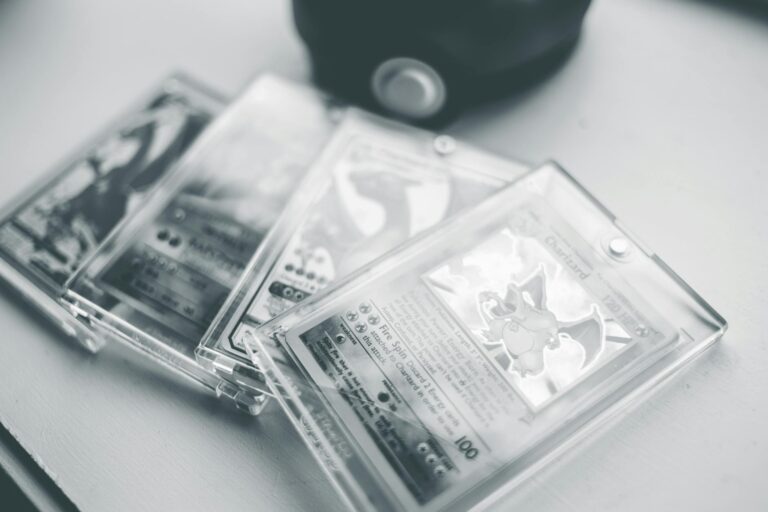
# How to Verify a 4th Print Booster Box Without Opening It
Verifying the authenticity of a 4th Print Pokémon booster box without opening it is a skill that collectors and investors need to develop in today’s market. The 4th Print designation refers to boxes from the fourth printing run of a particular set, and these boxes have become increasingly targeted by counterfeiters because they represent a sweet spot in the market—valuable enough to be worth faking, but not so rare that collectors immediately suspect counterfeits. Understanding how to spot a genuine 4th Print box requires knowledge of specific manufacturing details, printing variations, and quality control markers that separate legitimate products from fakes.
The first thing you need to understand is what makes a 4th Print box different from other printings. Each printing run of a Pokémon booster box has subtle variations in how the box is manufactured, printed, and assembled. The 4th Print typically shows specific characteristics in its printing quality, color saturation, and box construction that differ from earlier or later printings. These differences exist because Pokémon Company International and The Pokémon Company use different printing facilities and equipment over time, and manufacturing standards can shift between production runs.
Weight is one of the most reliable indicators of authenticity when examining a 4th Print booster box. A genuine booster box should weigh between 3.5 to 3.7 pounds, though this can vary slightly depending on the specific set. You can use a digital scale accurate to at least 0.1 pounds to check this. Counterfeit boxes often weigh noticeably different because they either contain fewer packs, use different packaging materials, or have packs filled with incorrect contents. If your box feels significantly heavier or lighter than it should be, this is a red flag. However, weight alone should never be your only verification method because some counterfeits are made with surprising precision.
The box seals themselves tell a story about authenticity. On a genuine 4th Print booster box, the seals should be perfectly aligned and evenly applied. Look at where the seal meets the box edges—there should be no gaps, bubbles, or uneven overlapping. The seal should have a consistent thickness and should not appear wrinkled or creased. Run your finger gently across the seal without applying pressure; it should feel smooth and uniform. Counterfeit seals often have visible imperfections like slight waviness, inconsistent pressure application, or areas where the seal material doesn’t adhere properly to the box.
The corner seams of the box are critical inspection points. On a legitimate 4th Print box, the corners should be perfectly square and the seams should be crisp and clean. The cardboard at the corners should not show any separation, and the glue lines should be invisible or nearly invisible. If you look at the corners from different angles under good lighting, you should see no gaps between the cardboard layers. Counterfeit boxes frequently have loose corners because the manufacturing process used to create them doesn’t match the precision of official Pokémon Company production. The corners might feel slightly flexible or you might notice tiny gaps where the cardboard hasn’t been glued properly.
Examining the printing quality requires a careful eye and good lighting. The artwork on a genuine 4th Print booster box should be crisp and clear with no blurriness. The colors should be vibrant and consistent across the entire box surface. Look at the small text on the box—the set number, the product code, the barcode, and any other printed information. This text should be perfectly sharp with no pixelation or fuzzy edges. The fonts should match official Pokémon branding exactly. Counterfeit boxes often have slightly blurry printing because the counterfeiter is working from a lower resolution image or using inferior printing equipment. The colors might appear slightly off, either too bright or too dull compared to genuine boxes.
The barcode on the box is another verification point. A genuine barcode should scan properly and correspond to the correct product. You can use a barcode scanner app on your smartphone to verify this. The barcode should be printed clearly with proper spacing and alignment. The numbers below the barcode should be readable and match the barcode itself. Counterfeit boxes sometimes have barcodes that don’t scan or that scan to incorrect products. The barcode printing might be slightly misaligned or the numbers might not match the barcode pattern.
The texture of the cardboard itself can reveal authenticity. Genuine Pokémon booster boxes use a specific grade of cardboard that has a particular feel and finish. Run your hand across the box surface—it should feel smooth but not slick. The cardboard should have a slight texture that you can feel but not see. Counterfeit boxes sometimes use cardboard that feels either too smooth or too rough. The finish might feel waxy or plasticky, which indicates inferior materials. The cardboard thickness should also be consistent; if you press gently on the sides of the box, it should feel solid and not flex excessively.
The holographic or foil elements on the box artwork should be examined carefully. On a 4th Print booster box, any foil or holographic elements should be perfectly aligned with the artwork. The foil should have a consistent shine and should not show any wrinkles, bubbles, or areas where it’s peeling. If the box has a holographic element, it should display the proper color-shifting effect when viewed from different angles. Counterfeit boxes often have foil that’s misaligned, dull, or that shows visible imperfections.
Inside the box, without opening the seals, you can sometimes observe the pack arrangement through the box opening. The packs should be arranged in a specific pattern that’s consistent across all genuine boxes of that set. If you can see the packs through any gaps or transparent areas, they should be neatly stacked and aligned. The pack arrangement should match what you’ve seen in photos of verified genuine boxes.
The box dimensions should be accurate. A standard booster box measures approximately 4.75 inches wide by 3.75 inches deep by 3.75 inches tall. You can measure your box with a ruler or measuring tape to verify these dimensions. Counterfeit boxes sometimes have slightly different dimensions because they’re manufactured using different molds or templates. Even a quarter-inch difference in any dimension can indicate a counterfeit.
The printing registration—the alignment of different colored inks—should be perfect on a genuine box. Look at areas where different colors meet, such as where the background meets the character artwork or where text overlaps with background elements. The colors should meet precisely with no color bleeding or misalignment. Counterfeit boxes often show registration errors where colors don’t align perfectly.
The set symbol on the box should be examined closely. This small symbol indicates which set the box contains. On a 4th Print box,