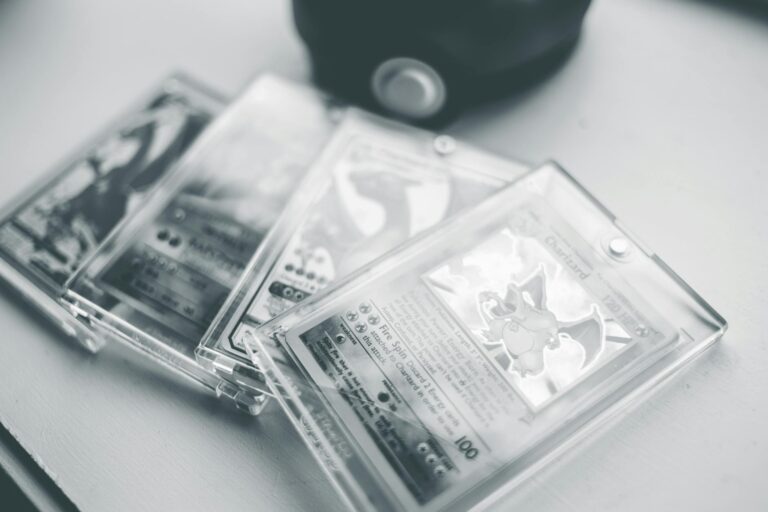
There is no definitive public count of exactly how many 4th print Blastoise cards from the Pokémon Trading Card Game’s Base Set exist worldwide, as the Pokémon Company has never released official print run numbers for individual print editions like the 4th print, and tracking relies on collector databases, grading services, and auction records that only capture a fraction of surviving copies[3]. What we do know comes from error card documentation, grading population reports, and collector communities, which suggest tens of thousands to possibly hundreds of thousands were produced, though many have been lost, damaged, or remain ungraded in private collections around the globe[1][3].
To understand this, let’s start with the basics of what a 4th print Blastoise card actually is. The Blastoise card is the holographic evolution of Squirtle, number 2/102 in the original Base Set released in 1999. It shows the massive blue turtle Pokémon blasting water from cannons on its shell, with 120 HP and powerful attacks like Hydro Pump that require four water energy cards. This card became iconic right away because Blastoise was a starter Pokémon from the first generation games, and its shiny holo foil effect made it a must-have for kids and collectors alike. The Base Set had multiple print runs to meet huge demand—first came the 1st Edition with the gold stamp, then Shadowless versions without text shadows on the right border, followed by unlimited prints that added those shadows for easier production[3].
The 4th print specifically refers to a later unlimited print run, mostly distributed in the UK around 1999-2000, which corrected some minor printing errors from earlier runs. For example, cards like Vulpix had their HP listed as “HP 50” instead of “50 HP” in 1st Edition, Shadowless, and early unlimited prints, but the UK 4th print fixed that to the standard “50 HP” format[3]. Blastoise itself had a tiny “Red Dot” error in some unlimited prints—a small red ink dot above the Hydro Pump attack’s water energy symbol—but this wasn’t unique to the 4th print and got corrected over time[3]. These 4th print cards look almost identical to other unlimited Blastoise holos, with the shadowed border text saying “Unlimited Edition” at the bottom right, but subtle differences like corrected text placements or ink quality help experts tell them apart under magnification or UV light.
Why don’t we have an exact number? Print runs for Pokémon TCG in the late 90s were massive because the game exploded in popularity. The Base Set as a whole sold millions of booster packs worldwide, with estimates from collectors putting total Blastoise production across all prints in the hundreds of thousands or more, since it was a chase holo rare pulled at about 1 in 72 packs on average[1][3]. But the 4th print was a regional run, primarily for Europe, especially the UK, to restock shelves after earlier prints sold out. Bulbapedia notes this run corrected errors like the Vulpix HP issue exclusively in the UK, implying it was a targeted batch rather than a global one, probably printed in the tens of thousands of packs[3]. Grading services like PSA give us clues: for standard unlimited Blastoise, PSA has graded over 230 copies of certain error variants, but population reports for plain 4th print holos aren’t broken out separately—they lump them into “Base Set Unlimited Blastoise[3]. Beckett and CGC have similar aggregates, with thousands of Base Set Blastoise slabs across all prints, but again, no 4th print-specific tally.
Auction sales paint a picture of scarcity in top condition. A pristine Test Print Gold Border Blastoise, a super-rare prototype not from the 4th print, sold for $216,000 in 2021 and another for $32,520 in 2023, showing how condition and uniqueness drive value[1]. Regular 4th print Blastoise don’t fetch that, typically selling raw for $20 to $100 depending on wear, or $200 to $500 graded PSA 9 or 10, because they’re more common than 1st Edition or Shadowless but still desirable for completists. Sites like Goldin and Fanatics Collect have auctioned dozens over the years, with UK sellers often listing “4th print confirmed” copies from old collections[1]. Collector forums estimate that only a small percentage—maybe 5-10%—of all printed cards get graded, so if grading databases show hundreds of unlimited Blastoise, the total printed could be 10,000 to 50,000 or higher for that specific run[1][3].
Digging deeper into production, Wizards of the Coast handled printing back then under license from The Pokémon Company. Booster boxes held 36 packs, each with a 1-in-3 chance of a holo rare, so one Blastoise per three boxes roughly. If the 4th print run equated to, say, 10,000 boxes for the UK market—that’s a conservative guess based on regional sales data from old distributor reports—it would mean around 3,000 to 4,000 Blastoise cards printed just for that wave[3]. But that’s speculative; actual numbers could be double or triple, as Europe was a hot market. Some ended up worldwide through trade, travel, or bulk imports, explaining why you find 4th prints in the US or Japan today.
Survival rates matter too. These cards are over 25 years old now. Kids played with them hard—bending, spilling soda on them, trading them roughly. Parents threw out binders during cleanups. Fires, floods, and moves claimed thousands more. Only high-grade survivors get logged: PSA’s pop report for Base Set Unlimited Blastoise shows over 10,000 total graded as of late 2025, with pristine 10s in the low hundreds[1][3]. Error hunters seek 4th prints for their “corrected” status, like the fixed Vulpix in the same sheets, making clean Blastoise from that run a proxy for set completion.
Counterfeits complicate counting. Fake Blastoise flood the market, especially from China, with reprinted holos mimicking unlimited prints. Real 4th prints have specific black print lines, font weights, and foil patterns verifiable by experts. Etsy even sells custom “Thicc Blastoise” fan cards printed on real stock, blurring lines for newbies[4]. Authentic ones get PSA or BGS stickers, which databases track, but ungraded ones in attics worldwide stay invisible.
Globally, distribution spread them far. UK kids got them from stores like Woolworths or game shops. Tourists bought extras. Online trade boomed in the 2000s on eBay, shipping them to Australia, Canada, even Brazil. Today, apps like TCGPlayer and Whatnot list dozens monthly, with sellers noting “4th print UK” to boost appeal. Japanese collectors import them for English Base Set sets, as Japan got its own versions later.
Comparisons help gauge rarity. Take the Masaki Trade Promos from Japan—only