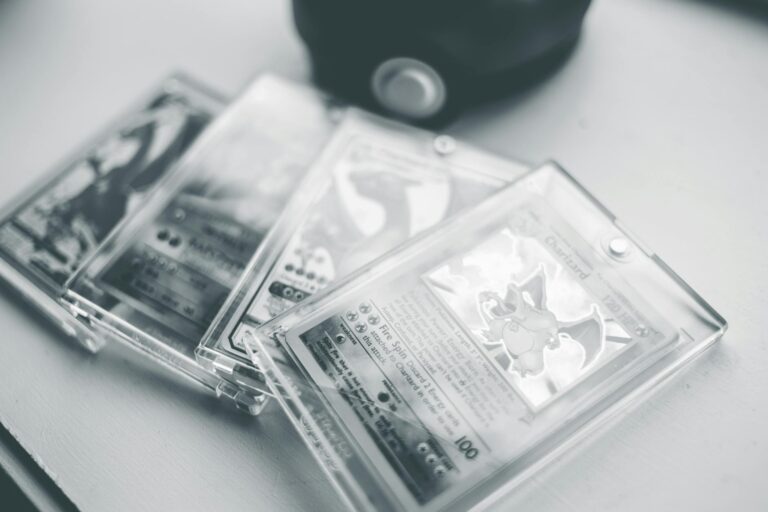
What Makes the 4th Print Charizard a Collector’s Holy Grail
If you have ever dipped your toes into the world of Pokemon trading cards, you have probably heard whispers about the Charizard card from the original Base Set. Not just any Charizard, though. The one everyone chases, the one that keeps collectors up at night, is the 4th print version. This card, marked simply as 4/102 Holo Rare from the 1999 Base Set, stands out as a true holy grail because of its extreme scarcity, its place in Pokemon history, and the way it captures the raw excitement of the game’s early days. Collectors treat it like buried treasure, and for good reason. Let us break it down step by step, exploring why this specific card has become the ultimate prize in a hobby filled with shiny distractions.
First off, understand what a 4th print Charizard even is. Back in 1999, when Wizards of the Coast released the Pokemon Base Set in English, they did not print everything at once. They used a print run system to keep up with skyrocketing demand. Each run got a symbol in the bottom left corner of the card. The first print had a L symbol, standing for first edition language. Then came shadowless prints without the drop shadow on the art, marked with centered text. Unlimited prints followed with shadows and right-justified text. But the 4th print? That is the rarest of the bunch. It has a specific dotted pattern in the bottom border, often called the “4th print dot matrix.” Only a tiny number of these were made before Wizards switched to later runs. This low print quantity means most packs from that era skipped it entirely, leaving very few in existence today.[5]
Scarcity is the biggest hook. Imagine opening thousands of packs and never pulling one. That is the reality for most players back then. The Base Set Charizard in general is iconic, but the 4th print takes rarity to another level. Recent sales show ungraded near mint copies going for around $400 to $650 on sites like TCGPlayer, with graded versions climbing much higher. For example, a near mint English 4th print sold for $540 in December 2025, and another for $649 just weeks earlier. Graded ones in PSA 9 condition have hit $1,793, while PSA 10s are pushing $10,000 or more. These prices keep rising because supply is drying up. People who owned them as kids either lost them, played them to death, or held onto them until now, when grading services like PSA and CGC have spotlighted their condition.[5]
Now, think about the history behind it. Pokemon exploded in 1998 in Japan, but the English launch in 1999 turned it into a global frenzy. Kids everywhere traded lunches for cards, and Charizard was the king. This fire-breathing dragon with its massive wings and fierce stare became the face of the game. The 4th print captures that pure, unfiltered hype from the very first English set. It is not some modern reprint or special edition like the Celebrations Charizard #4, which sells for $400 in TAG 10 but floods the market from 2021 packs. No, the 4th print is vintage 1999, printed on early stock with subtle differences in color, holo foil, and texture that grading experts can spot under magnification. It feels like holding a piece of childhood magic frozen in time.[1][5]
Condition matters more here than almost any other card. Pokemon cards from 1999 were not treated like investments. They got bent in binders, splashed with soda, or sleeved poorly. A pristine 4th print is like finding a needle in a haystack. Graders look at centering, edges, corners, and surface scratches. A GEM MT 10 is flawless, but even NM 8 or 9 copies command huge premiums because so few survive. Compare it to other Charizards: a 1st Edition Shadowless Holo sold for over £4,000 in 2025, but those had higher print runs. The 4th print edges it out in raw chase factor. Auction houses like Goldin and Fanatics have moved similar rarities for $40,000 to $100,000, proving the market values these old prints sky-high.[1][3]
What sets it apart from other holy grails? Take the Ex Dragon Frontiers Gold Star Charizard from 2006. That one is rare too, but it is a later set with intentional low pulls. Or the Topps Chrome Tekno Charizard, super shiny and hard to get, but modern production means more copies float around. Even test prints like the Disco Holofoil Charizard fetched $113,880 in 2023 because they were prototypes. The 4th print, though, is not a gimmick or error. It is a legitimate production card from the most demanded set ever, with organic rarity from halted print runs. Wizards stopped after the 4th because demand shifted, leaving it as the final whisper of that initial wave.[1]
Collectors obsess over the details. Look closely at a 4th print under light. The holo pattern dances differently than later unlimiteds. The black star symbol is crisp, the energy costs bold. Fans debate the exact print indicators online, with dot patterns varying slightly even within the 4th run. Some call it the “holy grail of holos” because pulling one felt impossible even in 1999. Stories abound of kids trading entire collections for one, only to have it stolen or damaged. Today, online communities track populations: PSA has graded thousands of Base Set Charizards, but 4th prints number in the hundreds at best, with top grades in the dozens.[5]
The market proves its grail status. Prices have ballooned. In 2022, Base Set Charizards were hot, but by 2025, 4th prints are leading the charge. A CGC Mint 9 sold for $1,105 in November 2025. Unlimited holos go for $125 to $150 ungraded, but step up to 4th print, and it quadruples. This is not hype; it is sustained demand from boomers who played as kids, millennials rediscovering nostalgia, and new gen Z investors jumping in. Shows like Pokemon events or card conventions buzz with 4th print sightings, where owners guard them like family jewels.[5]
Beyond money, it is emotional. Owning a 4th print connects you to Pokemon’s roots. It reminds you of playground battles, binder flips, and that thrill of a holo rip. Unlike mass-produced modern cards like Mega Charizard X ex at $34, it cannot be farmed from booster boxes. You hunt estate sales, Facebook groups, or trusted dealers. Fakes exist, so authentication is key, but a real one verified by PSA feels unbeatable. It is the card that defines “chase” in the TCG world.
Rarity feeds into pop culture too. Documentaries, YouTube unboxings, and podcasts rave about it. Influencers crack open dusty Base Set boxes hoping for a 4th print hit, racking up millions o