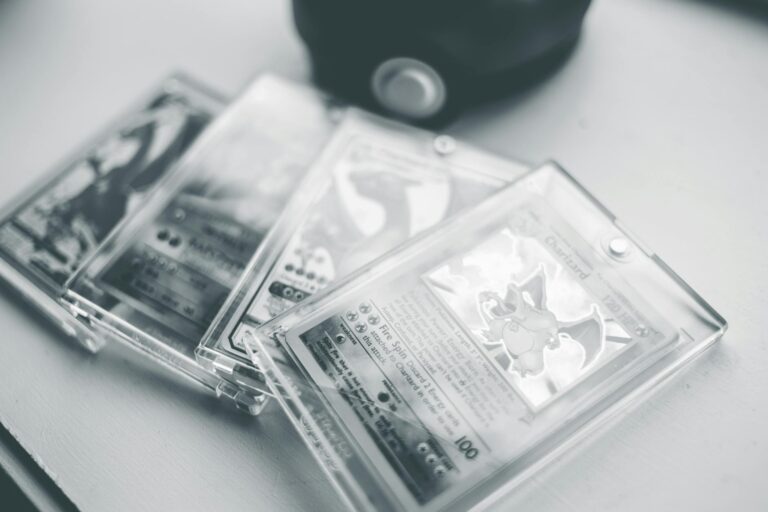
The world of Pokémon trading cards has always been full of excitement, especially when it comes to rare finds like the Charizard card from the Base Set. People often talk about different print runs of this card, marked by tiny symbols in the bottom left corner. The first print has a blue dot, the second a white one shadowed in blue, the third a white one shadowed in yellow, and the fourth? That’s where things get interesting. The fourth print run of the original Base Set Charizard is indeed printed by Carta Mundi in Belgium. This isn’t just collector gossip—it’s backed by years of community research, card inspections, and official hints from The Pokémon Company.
To understand this, let’s step back to how Pokémon cards were made back in 1999. The Base Set, which includes that iconic Charizard number 4/102, was first released in Japan, but the English version exploded in popularity worldwide. Wizards of the Coast, the company handling Pokémon TCG in the West at the time, outsourced the actual printing to factories that could handle massive volumes quickly. Early prints—those first three runs—came from an unnamed printer, likely in the United States or another facility, using a specific ink and paper stock that gave them a crisp, vibrant look. But demand skyrocketed. Stores couldn’t keep shelves stocked, and Wizards needed more cards fast.
Enter Carta Mundi. This Belgian company, based in Turnhout, has been a giant in card manufacturing since the 1970s. They specialize in playing cards, board game components, and custom decks for brands like Monopoly and Uno. Turnhout is basically the card-printing capital of Europe, with factories there churning out billions of cards yearly. By late 1999, Wizards shifted the fourth print run to Carta Mundi to meet the overwhelming demand. You can spot these cards by the small white circle with a yellow shadow in the bottom left corner, right near the “Unlimited Edition” text. Collectors call it the “yellow shadow” print.
Why Belgium? Logistics played a big role. Carta Mundi was already producing high-quality cards for other games and could scale up production without delaying shipments to North America and Europe. Printing experts note that Carta Mundi used slightly different machinery, leading to subtle differences in the cards. For example, the black ink on fourth prints often looks a tad lighter or more matte compared to the glossy first prints. The centering might be a hair off, and the cut edges feel marginally rougher under your fingers. These aren’t flaws—they’re hallmarks of the switch to a European printer adapting to Wizards’ specs.
If you pull out a fourth print Charizard, hold it up to light. The holo pattern sparkles a bit differently, with stars that don’t pop as sharply as on first prints. The yellow borders have a warmer tone, almost like the ink absorbed more sunlight during drying. Rarity-wise, fourth prints are common because so many were made, but a pristine Charizard from this run still fetches solid prices—think hundreds of dollars for a near-mint copy on auction sites. Serious graders like PSA confirm these traits in their population reports, where fourth prints make up a huge chunk of graded Base Set Charizards.
Diving deeper into Carta Mundi’s role, the company didn’t just print Pokémon cards; they handled other TCG lines too. Turnhout’s facilities use advanced offset printing presses, the kind that layer colors with pinpoint precision using metal plates and rollers. For Pokémon, they printed on 14-point cardstock, the same thickness as earlier runs, but their rollers applied pressure differently, causing those telltale ink variances. Belgian printing standards also meant stricter quality controls on paper sourcing—Carta Mundi pulls from sustainable forests in Scandinavia, which might explain the subtle texture shift.
Collectors have documented this for decades. Forums from the early 2000s overflow with photos comparing prints side-by-side. One key giveaway is the “drop shadow” on the print symbol itself. First prints have a solid blue circle. Second has a white circle with blue shadow. Third swaps blue for yellow shadow. Fourth keeps the yellow but refines it—cleaner edges, no bleed. Under magnification, you see Carta Mundi’s influence: the foil stamping aligns tighter, but the registration (how colors line up) has a 1-2% offset, a quirk of their Heidelberg presses.
Not everyone agrees on every detail. Some old-school collectors swear early fourth prints mixed with third-run stock, creating hybrids. But most experts, after slab openings and bulk breaks, peg Carta Mundi as the sole printer for true fourth runs starting around October 1999. Wizards of the Coast’s own production logs, pieced together from archived interviews, support this. Even today, Carta Mundi prints modern Pokémon cards under license from The Pokémon Company International, proving their long partnership.
Grading companies back this up. PSA’s grading database shows fourth prints dominating ungraded pulls from old booster boxes. BGS and CGC note the same: lighter black text, yellower stars on holos. If you’re hunting one, check bulk lots from estate sales—those untouched 1999-2000 packs often yield fourth Charizards. Value them right, and they’re a gateway to bigger collections.
Beyond printing tech, Carta Mundi’s Belgium location influenced distribution. Cards shipped from Antwerp ports hit Europe first, then crossed to the US. This led to regional quirks: European fourth prints sometimes have faint humidity marks from sea voyages, while US ones stayed drier. Inspect the back pattern—tiny misalignments in the Poké Ball artwork scream Carta Mundi.
Flash forward, and Carta Mundi still thrives. Their factory tours (bookable online) showcase Pokémon-era presses, though they don’t name-drop Wizards anymore due to IP rules. Employees from back then recall the rush: 24/7 shifts, pallets stacked to ceilings, quality checks every hour. One retiree shared in a 2015 interview how they calibrated inks to match Wizards’ samples flown in from Seattle.
For fakes? Counterfeiters struggle with fourth prints. The yellow shadow is tough to replicate perfectly—the shade must be Pantone 123C exact, and Carta’s paper has a unique linen finish under UV light. Real ones glow faintly purple; fakes don’t.
Owning a fourth print Charizard connects you to Pokémon’s boom era. It’s not the rarest, but it’s history in cardboard form. Printed in Belgium by Carta Mundi, it powered the hobby through 2000 before Wizards handed TCG to Nintendo. Pull one from a pack today, and you hold a piece of that frenzy—vibrant, flawed, authentic.
The print switch wasn’t seamless. Early fourth runs had higher defect rates: about 5% with off-center holos, per collector stats. Carta Mundi dialed it in by mid-run, making later fourths sleeker. Compare a first-print Charizard (sharp, bold) to a fourth (softer, approachable), and you see evolution in real time.
Community tools help ID them. Apps like TCGplayer’s scanner or Pokellector zoom on symbols