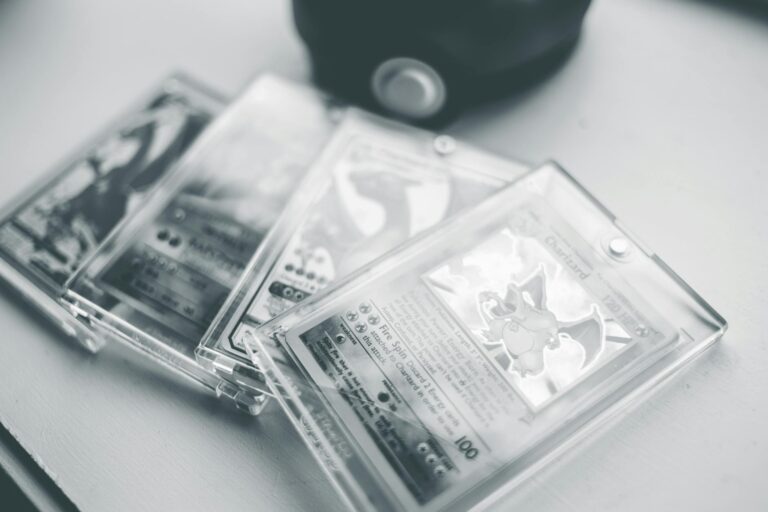
Spotting the 4th Print Charizard on eBay listings can be tricky because sellers often mix up different versions, but with careful checks on photos, titles, and details, you can tell them apart and avoid overpaying for common cards while hunting for valuable ones. This guide walks you through every step in plain, simple words, covering the main Charizard #4 cards that pop up, what makes a 4th print special, and tons of real tips from sales data to zoom in on listings like a pro.
First off, understand there are a few key Charizard #4 cards people mean when they say “Charizard #4” on eBay. The big ones are from the original Base Set (1999), Base Set 2, Crystal Guardians (2006), and the ultra-rare 1st Edition Base Set. But the “4th print” usually points to the fourth printing run of the Base Set Charizard #4 holo rare, which is way more common and cheaper than earlier prints like 1st, 2nd, or 3rd. Early prints from shadowless or unlimited first runs can fetch hundreds or thousands, while 4th prints sit around $200 ungraded based on recent sales.[1][2] Sellers slap “Charizard #4” in titles to get clicks, so you have to dig into the images and description.
Start with the listing title. Look for clues like “Base Set Charizard #4,” “Unlimited,” “Shadowless,” or “Crystal Guardians #4/100.” If it just says “Charizard #4 Holo” without specifics, red flag – click into the photos fast. True 4th print Base Set cards won’t scream “1st Edition” or “Shadowless” because those are earlier runs. 1st Edition has a blue stamp in the bottom left, shadowless lacks black lines around the artwork border, and later prints like the 4th have those lines plus a drop shadow under the character.[1][2][4] Crystal Guardians #4 is reverse holo from 2006, totally different art with Charizard breathing fire in a crystal pose, and it’s not a “print run” thing but a set-specific card worth $1,000+ in CGC 10.[1]
Now, dive into the photos – this is where 90% of spotting happens. eBay requires multiple angles for good listings, so demand zoomed shots if they’re blurry. For Base Set Charizard #4 4th print, check the back first. All Base Set backs say “© 1995, ’96, ’99 Nintendo, Creatures, GAMEFREAK. ©1999 Wizards” in tiny print at the bottom. Count the copyright years: 1st print has three years (1995-99), but later prints like 4th keep the same back mostly. The real giveaway is the front.[2]
Examine the border around the artwork. 4th print has thick black lines outlining the entire card border, including above and below the character box. Earlier shadowless prints have no black lines at all, making the art pop cleaner. Unlimited prints (like 2nd and later) start adding those lines. Zoom 200% on the shadow under Charizard’s feet – 4th print has a noticeable dark drop shadow blending into the fire background, while shadowless has almost none.[2][4] If the listing shows a crisp white border with no lines, it’s probably shadowless or better, not 4th print.
Next, check the text alignment and font. On 4th print Base Set #4, the “Charizard” name at the top is perfectly centered, but the HP “120” in the top right might have slight pixelation if it’s a low-quality scan – real cards in good light show sharp edges. The attack names like “Fire Spin” and “Fire Blast” have even spacing. Compare to photos in sold listings: recent eBay sales of ungraded Base Set #4 went for $197 average, often 4th prints with visible border lines.[2] Graded ones in PSA 10 hit $10,100 but those are rare gems, usually shadowless or 1st Ed.[2][4]
Look at the centering. 4th prints from mass production often have off-center art, with Charizard shifted left or right by 10-20%. Perfect centering screams trimmed or higher-grade early print. Edge wear is common on 4th prints – white borders yellow slightly from age, unlike pristine vault pulls. If the photo hides edges or uses filters, ask for raw lightbox shots.
For Crystal Guardians #4, it’s easier to spot because the art is unique: Charizard in a glowing crystal with blue energy, numbered 4/100, holo foil reverse side. No print runs here, just set rarity. Listings mix it with Base Set, so check the set symbol – Crystal Guardians has a shiny diamond icon. Recent CGC 10 sales hit $1,999 and $1,100, way above Base Set 4th prints.[1]
Base Set 2 #4 is another faker-upper. It has Charizard in flight with wings spread, #4/130. 4th print isn’t a term here, but unlimited versions have border lines like Base Set late prints. PSA 10s sold for $8,600 recently, but ungraded are cheaper.[3] Spot it by the set code “BS2” on back.
Counterfeit check is huge for 4th prints since they’re common. Fakes have blurry holo patterns – real 4th print holo sparkles evenly when tilted, with rainbow shifts on Charizard’s wings. Fake fire looks flat orange, not gradient. Weigh the card if buying lots (ask seller): real weighs 1.7-1.8 grams. UV light test: genuine WOTC cards glow faintly blue on edges, fakes don’t.
Seller feedback matters. Top-rated sellers (99%+ with 10k sales) list print details honestly. Avoid new accounts with stock photos. Check “sold items” on their profile for similar Charizard #4 sales – if they sold shadowless before, they know their stuff.
Price is your biggest clue. Ungraded 4th print Base Set #4 sells $150-250 lately.[2] If priced $500+, it’s likely shadowless or graded. 1st Edition ungraded? $3,742 average, insane for fakes.[4] Crystal Guardians raw around $100-300.[1] Use completed sales filter on eBay: search “Charizard #4 sold” and match photos.
Ask questions like a boss. Message: “Is this shadowless or unlimited 4th print? Can you show border close-up and back copyright? Tilt video of holo?” Good sellers send extras. Bad ones ghost or block.
Grading spots fakes too. Look for PSA/BGS/CGC labels in photos. PSA 10 Base Set #4 (likely not 4th print) $10k+.[2] But slabbed 4th prints grade lower, PSA 8 around $800.[2] Verify slab serial on grader sites.
Common mistakes buyers make: trusting titles only, ignoring phot