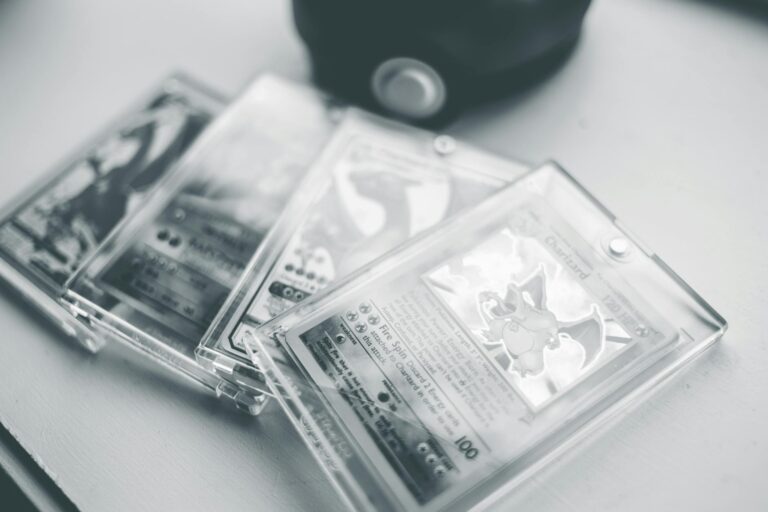
Direct answer: The key differences between a 1st Edition Charizard (Base Set, 1999) and a 4th Print (often called Base Set Unlimited 4th print or later reprint) are *scarcity, the “1st Edition” stamp, subtle production attributes (such as shadowless vs. shadowed borders and print color/centering), market value, and collector demand*, with the 1st Edition being far rarer and typically worth much more to collectors.
Essential context and supporting details:
What people mean by “1st Edition” and “4th Print”
– “1st Edition” refers to the very first English print run of the Base Set; these cards are identified by a circular “1st Edition” stamp on the left side of the card’s artwork and come from a smaller, earlier print run that also includes the “shadowless” production style for many cards[2].
– “4th Print” is an informal way collectors refer to later, far more mass-produced printings of the same Base Set cards (sometimes labeled “Unlimited” or successive printings); by the time later prints were produced the 1st Edition stamp was no longer applied and certain production characteristics had changed (shadow added to the right of the artwork border, slight shifts in color/ink, and different copyright/topline treatments)[2][3].
How to visually and physically tell them apart
– 1st Edition stamp: The single clearest visible sign is the small circular “1st Edition” stamp on the left side of the illustration near the bottom; later prints lack this mark[2].
– Shadowless vs. shadowed border: Early prints (including many 1st Edition and early runs) are “shadowless,” meaning there is no drop shadow at the right edge of the artwork window; later prints show a distinct shadow that frames the artwork—hence “shadowless” versus “shadowed” or “unlimited” variants[2].
– Copyright / font differences and printing idiosyncrasies: Early and later print runs sometimes show differences in the copyright line text, the color saturation of the artwork, and the card’s cardback/border tones; error varieties (such as misapplied stamps or color shifts) are historically tied to early 1st Edition print runs[3].
– Known printing errors specific to early/1st Edition runs: Some error types (e.g., stamp transfer issues, ink speckling, or “d” looking stamps on some 1st Edition cards) are documented more often among early batches; these can be collectible in their own right[3].
Why 1st Edition is rarer and typically more valuable
– Smaller initial print run: The 1st Edition run for the Base Set was limited compared with subsequent unlimited printings; Wizards of the Coast never published exact print numbers, but professional grading population data and auction results demonstrate the 1st Edition Charizard’s relative scarcity[1][4].
– Grading populations and PSA data: Grading services (PSA, CGC, etc.) show far fewer 1st Edition Charizards graded overall, and especially far fewer in top grades (PSA 10, PSA 9.5), which amplifies value dramatically; examples of auction results have set very high price marks for PSA 10 1st Edition Charizard slabs[1][4].
– Market psychology and iconic status: Charizard is a cultural icon and the Base Set holo Charizard amplifies desirability; because the 1st Edition stamp signals the very first English release of that iconic holo, collectors prize it above later unlimited copies[1][2].
Price differences and market behavior
– Wide value gap: Price tracking sites and auction results show very large differences by edition and grade: ungraded or low-grade unlimited prints may be collectible but low thousands or hundreds, while high-grade 1st Edition Charizards have historically sold for many tens of thousands up to hundreds of thousands or more when in PSA 9/10 condition[4][1].
– Price sensitivity to condition and grading: For any given Charizard, a single grade step (e.g., PSA 9 vs PSA 10) can change price by multiples; because most surviving 1st Edition cards were handled as kids’ cards in the late 1990s/early 2000s, truly perfect PSA 10 1st Editions are extremely scarce and command premium prices[4][1].
– Market volatility: Values can surge or fall based on collectible market cycles, celebrity sales, and macro demand; historical spikes (for example the COVID-era surge) show rapid appreciation at times and subsequent fluctuations[1].
Collectible variations that affect identification and value
– Shadowless 1st Edition vs Shadowless Unlimited vs Shadowed Unlimited: There are sub-categories collectors track—1st Edition shadowless, shadowless unlimited (no 1st Edition stamp but still without the shadow), and later shadowed unlimited prints; each has distinct collector valuation tiers[2].
– Error cards and anomalies: Specific errors tied to early prints—such as misprinted energy symbols on certain gym promo cards or oddities in the 1st Edition stamp—can be either detracting or extremely prized depending on rarity and desirability; Bulbapedia catalogs many such error varieties[3].
– International printings and later reprints: Multiple countries and languages received Base Set and subsequent reprints across years; non-English prints, promotional reprints, and modern reissues (e.g., reprints for Anniversary products) are visually similar but differ in copyright text, set codes, and other identifiers.
Authentication, grading, and best practices for sellers/buyers
– Use a reputable grading service: Because the market is so grade-sensitive, many buyers seek PSA, CGC, or Beckett grading to verify condition and authenticity before high-value transactions[4].
– Inspect the 1st Edition stamp and shadow: Look at the left stamp, check for shadowless borders, and inspect the card’s center/edges/corners for wear; high-grade 1st Editions show exceptional centering, sharp corners, and intact holo surface.
– Beware counterfeits and alterations: High-value cards are target for counterfeiters and altered cards; professional graders and experienced dealers are the most reliable routes to verify authenticity and detect recolors, regluing, or fake stamps.
Examples and market context (illustrative recent history)
– Record sales and publicized market highs: High-grade 1st Edition Charizards have repeatedly set high-water marks in auctions and private sales, with major news coverage when a rare slab sells for a new record price[1].
– Aggregated pricing data: Price tracking sites and marketplaces list median and sale prices across grades; data show PSA 10 1st Edition prices far exceed comparable grades of unlimited prints, and mid-grade 1st Editions still usually command premiums over unlimited cards[4].
Why a casual collector should care (and what matters most)
– If you own a Base Set Charizard, the most important visual checks are whether it has a 1st Edition stamp and whether it’s shadowless or shadowed[2].
– For investment/valuation: editio