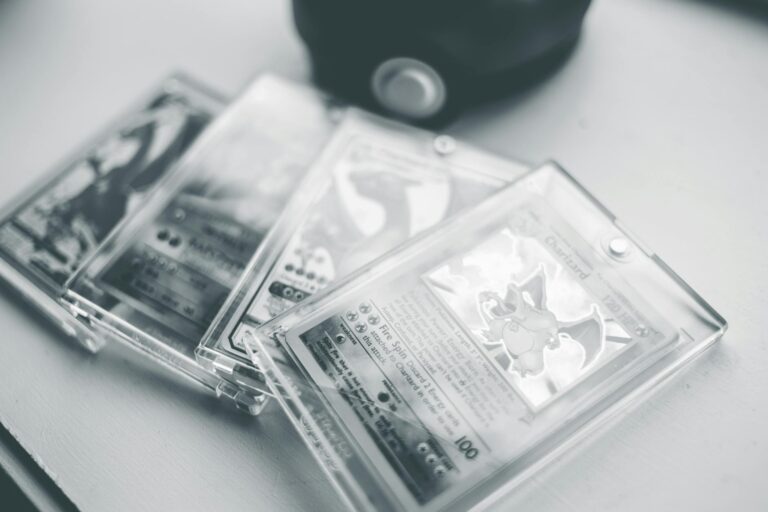
Are 4th print cards exclusive to English or multilingual?
Direct answer:
Fourth-print (or “4th print”) trading cards are not inherently exclusive to English; whether a fourth printing is English-only or multilingual depends entirely on the issuing company’s printing run choices and the product’s intended markets, not on any universal rule about “4th prints.” The language(s) used on any given printing must be determined by checking the specific product release notes, manufacturer communications, or the physical cards and packaging for that print run.
Essential context and supporting details
What “4th print” usually means in hobby practice
– “Fourth print” is a descriptive term collectors use to indicate that a particular card design or template has been produced at least four times, with each printing often labeled internally by the manufacturer or identified by collectors through subtle differences (card stock, holographic foil, set code, copyright year, or a print-run symbol). It is not a standardized global designation with fixed characteristics across companies; it’s a sequential production descriptor rather than a specification about languages or distribution.[3][2]
– Manufacturers may reprint cards for many reasons: to correct errata, to increase supply, to add alternate art or special finishes, or to localize text for different regions. The same card name or design can have multiple printings that differ in wording, legal text, flavor text, or typography, and these differences are how collectors and tournament organizers identify distinct printings.[3][4]
Who decides language for a particular printing
– The issuing company (the card game or trading-card publisher) decides the language policy for each print run based on commercial strategy and legal/packaging requirements for intended markets. Large TCG publishers often produce parallel print runs targeted at specific regions: an English-language print for global English markets, and separate localized prints (French, German, Spanish, Japanese, Korean, Chinese, Portuguese, Italian, etc.) for other territories. These choices may be reflected on the card face, the back, the packaging, and in product documentation or press releases from the publisher.[3]
– Example: Official tournament documents and reprint rules for major publishers (for example, Pokémon’s tournament handbook) show that reprints and reprinted cards can exist in multiple languages and that the publisher tracks legality and differences between versions; language differences are part of how reprints are managed for competitive play and distribution.[3]
Common patterns seen in the hobby
– Some reprints are language-specific: a reprint designated for a specific region will typically be printed in that region’s primary language(s). For example, a reprint targeted at Japan will be in Japanese; one for Europe might be in English, German, French, Spanish, and Italian depending on packaging and distribution plans. A “fourth print” could be an English print if the publisher chose to reprint the English-language sheet for the fourth time, or it could be a multilingual sheet if the fourth printing was assembled to serve multiple markets simultaneously. There is no universal rule that the nth print must be English-only or multilingual; it follows publisher decisions and commercial logistics.[3][2]
– Some publishers consolidate multiple languages on the same physical sheet or package when economical (e.g., using multiple localized packs or printing separate language variants from the same master design), but that is a production decision, not a naming convention tied to “4th print.”[2]
How to determine whether a specific 4th print is English or multilingual
– Check official product information: Manufacturer press releases, product Q&As, and official FAQs often state the languages included in a set or a reprint run when the product is intended for multiple territories; these documents are the primary authoritative source for language details.[2][3]
– Inspect the physical card and packaging: Card face text, copyright lines, set codes, legal text, and the language on the box or blister are practical indicators. Many companies put a language code or distribution region on packaging or the product page. Collectors use these visible cues to identify which language a particular printing uses.[4][2]
– Consult tournament/legal rulings and official reprint lists: For sanctioned play, publishers maintain reprint or legality lists that often specify the release language, as certain tournaments require cards to be in the players’ language or in the official language(s) of the event; reprint descriptions in these lists can reveal language for specific print runs.[3]
– Use collector databases and community resources: Trading-card databases, dedicated wikis (e.g., Bulbapedia for Pokémon), collector forums, and marketplaces frequently document different printings and their language variants based on community identification and seller descriptions; while useful, these should be cross-checked with official sources where precision matters.[4][7]
Why language matters to collectors and players
– Playability and tournament rules: Competition organizers sometimes require cards to be in a language judged readable by both players or in an official tournament language; publishers’ reprint policies and tournament handbooks can explain how reprints in different languages are treated for format legality and rulings.[3]
– Card text variations: Language affects how rulings and card interactions are interpreted; translated text can introduce wording differences that matter in competitive contexts, which is why reprint documentation often explicitly notes whether the text is functionally identical across printings.[3]
– Collector value and identification: Some collectors prize certain language variants (e.g., first print English vs. Japanese printings) and may assign premiums to rarer regional runs or misprinted multilingual sheets; collectors rely on visual cues, serial numbers, or publisher notes to distinguish these.[4][7]
Special cases and examples
– Market-limited reprints: A publisher might issue a “fourth print” exclusively for a regional event or promotional distribution; that print could be in a language(s) specific to that event and would not therefore be English by default. The details are controlled by the publisher and announced in product communications.[2]
– Corrective reprints: If a prior print contained an erratum or misprint, a subsequent print run (including a fourth print) might be specifically produced to correct text across all languages or to correct just one language variant; the corrective action and scope are determined and described by the publisher.[4]
– Multi-language sheets and packaging: Some modern mass-market sets for multilingual regions (e.g., certain European releases) may be produced with parallel localized packs from the same production run, meaning the same product window can yield English and non-English cards; again, whether a “4th print” includes multiple languages depends on the production plan.[2]
When medical statements appear on cards (authoritative sourcing requirement)
– If any card includes medical claims or health-related text (rare, but possible in educational or promotional cards), those statements should be verified against authoritative sources. Authoritative sources for medical information include peer-reviewed journals, government health agencies (CDC, NIH, WHO), and established medical institutions. Any medical claim printed on a card should be cross-checked with those sources for accuracy before being treated as factual in a competitive or educational context. Cite the specific authoritative source used to verify the medical statement when reporting or using the card’s information for health decisions. (Example of authoritative institutions: Centers for Disease Control and Prevention (CDC), World Health Organization (WHO