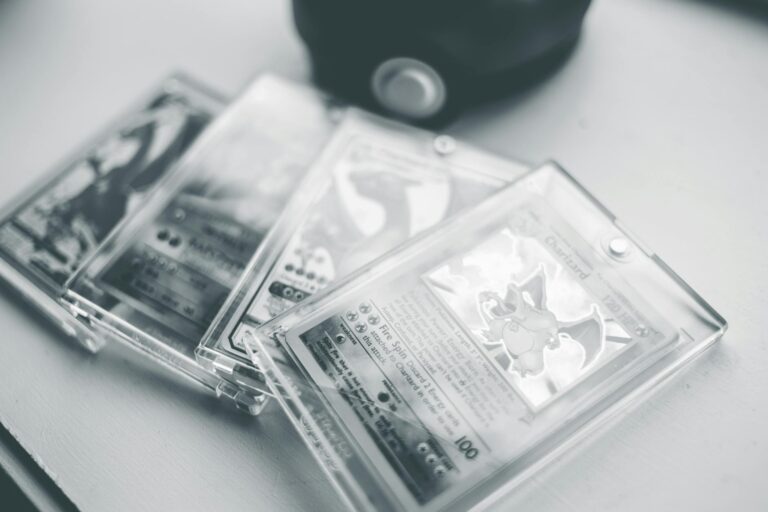
Imagine you’re holding a Pokémon card from the early days of the game, like something out of the original Base Set from 1999. You’ve heard collectors talk about “1st edition” cards being super valuable, but what makes a card a “2nd print”? A 2nd print Pokémon card is one from the second printing run of a specific set, usually lacking the special “1st Edition” stamp that marks the very first batch produced. These cards came right after the initial release to meet huge demand, and spotting them involves checking a few key visual clues on the card itself. They’re not as rare as 1st editions, but they can still hold solid value, especially if they’re in great shape or from popular sets like Jungle or Fossil.
To understand this better, let’s dive deep into the world of Pokémon card printings. Back in the late 1990s, when Pokémon Trading Card Game exploded in popularity, Wizards of the Coast handled printing in the US and Canada. The very first cards printed had a black circle with “Edition 1” or “1st Edition” stamped in the bottom left corner, under the artwork. This stamp was only on that initial run, meant to last just a few months. Once those sold out fast, they cranked out more cards without that stamp—these are the 2nd prints, also called “Unlimited” prints. Every card from Base Set onward had these waves of printings, and knowing the differences helps you tell if your card is from that sweet spot of early but not ultra-rare production.
One of the biggest tells for a 2nd print card is the absence of the 1st Edition stamp. Flip your card over or look closely at the front bottom left. If there’s no black circle saying “1st Edition,” it’s likely a 2nd print or later. But it’s not just about what’s missing—look at the card’s border and holofoil patterns. Early 2nd prints from Base Set often have a crisp, bright blue back, just like 1st editions, but the front might show subtle shifts. For holographic cards, 1st editions have a dotted or “starry” holo pattern that sparkles wildly under light. 2nd prints smooth that out to a cleaner, less dotted foil—think of it like the difference between a rough sketch and a polished version. Hold it up to a light: 2nd prints reflect evenly without those heavy star bursts.
Another key trait pops up in the copyright line at the very bottom of the card. On 2nd print Base Set cards, it reads something like “© 1995, 96, 98, 99 Nintendo, Creatures, GAMEFREAK, Wizards” or slight variations, but without the 1st Edition exclusivity. Compare this to later Unlimited prints, which might tweak the years or spacing. The text is sharp and evenly spaced, with no blurry fonts or off-center alignment that screams fake. Speaking of fakes, authentic 2nd prints feel sturdy—bend it gently (don’t actually damage it), and it snaps back with a satisfying pop, not floppy like counterfeits.
Rarity symbols play a huge role too, and they tie right into print runs. Down in the bottom right, next to the collector number, you’ll see shapes: a black star (★) for rares, diamond (◆) for uncommons, or circle (●) for commons. These stayed consistent across prints, but on 2nd prints of holo rares like Charizard, the foil shines with a specific golden hue that’s deeper than modern reprints. No symbols? It might be a promo or error card, but for standard 2nd prints, that little icon is your rarity roadmap. Three stars or a golden circle often mean secret rares from later sets, but in early 2nd prints, even a single star can boost value if it’s a chase card.
Now, let’s talk condition, because a 2nd print in mint shape is gold. Check the corners—they should be sharp, not dinged or white-frayed. Edges need to be straight, without fuzziness or whitening from play. The surface should be glossy but not sticky or overly textured. Centering is crucial: the artwork and borders should line up perfectly, about 60/40 side-to-side and 55/45 top-to-bottom for top grades. Scratches, print dots, or roller marks (tiny lines from the printing press) drop value fast. Collectors grade these on a scale from PSA 10 (gem mint, flawless under 10x magnification) down to lower tiers— a PSA 9 2nd print Charizard can fetch thousands, while a beat-up one might go for pocket change.
Set symbols are another giveaway. Early sets like Base Set don’t have fancy expansion icons like today’s cards, but Jungle (the second set) introduced a leaf symbol, and 2nd prints there match the vibrant colors without fading. Regulation marks, like the letter ‘G’ or ‘F’ near the bottom left in modern cards, didn’t exist back then, so their absence confirms an old-school 2nd print. Collector numbers, like “4/102” for Base Set, stay the same across prints, but pair that with the print traits, and you’ve nailed it.
Value-wise, 2nd prints bridge the gap between ultra-rare 1st editions and common Unlimiteds. A raw (ungraded) 2nd print Blastoise holo might sell for $50-200 depending on condition, while graded ones climb higher. Factors like population reports (how many exist in high grades) from sites like PSA push prices up if few survive. Shadowless cards—another early variant—are technically 2nd or 3rd prints with no drop shadow on the artwork border, making them even punchier. Spot these by the even, shadow-free frame around the character.
Digging deeper into printing quirks, 2nd prints sometimes show slight color shifts. Venusaur’s green might pop greener, or Zapdos’ electric blue feels more vivid than later runs. The drop shadow on the right edge of the card—faint on 1st editions—disappears entirely on true 2nd prints, giving a cleaner look. Card weight matters too: authentic Wizards-era cards weigh about 1.7-1.8 grams each, heavier than modern ones. Stack a few against known fakes, and the heft tells the tale.
For non-holo cards, traits are subtler. The matte finish on commons and uncommons from 2nd prints has a soft sheen, not glossy like holos. Text alignment is pixel-perfect—no wavy lines or mismatched fonts. Attack names, HP values, and energy costs match exactly across prints, but fakes often botch the fine print, like misspelling “Pokémon” or wonky weak/resist stats.
Promo stamps set some 2nd prints apart, like league events or store exclusives, but official ones from The Pokémon Company are legal. Avoid altered cards with autographs or custom art unless stamped officially—they’re tournament-illegal. Proxies only for damaged tournament cards, per rules.
In sets beyon