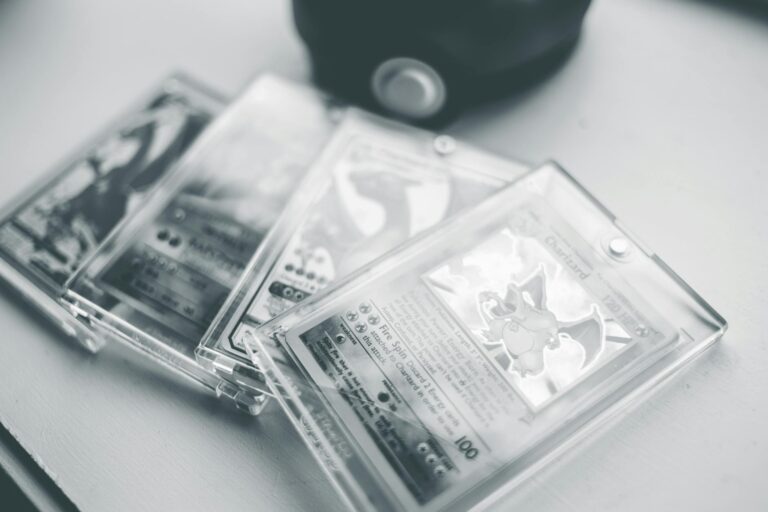
Pokémon Base Set cards came out back in 1999, and they’re some of the most collected cards ever because of how much their value changes depending on which print run they’re from. The main print runs for Base Set are First Edition, Shadowless, and Unlimited, and spotting the differences is all about looking at a few key spots on the card without needing any fancy tools. Collectors love these early runs because they’re rarer and worth way more, sometimes thousands of times a common Unlimited card. Let’s break it down step by step so you can check your own cards easily.
Start with the very bottom left corner of the card, right near the artwork border. On First Edition cards, you’ll see a little black circle with a 1 inside it. That stamp means it was from the very first batch printed by Wizards of the Coast, the company that handled Pokémon cards back then. Only a small number of these were made before they switched to later runs, so First Edition cards are super rare, especially the holographic ones like Charizard or Blastoise. If there’s no stamp at all in that spot, or if it’s just empty, your card isn’t First Edition. Hold the card up to good light and tilt it slowly—fakes sometimes have blurry stamps or the wrong font size.[1][3][5][6]
Next, look at the right side of the card, where the card number and rarity symbol sit, like 4/102 for a common or ★ for a rare. In First Edition and early Shadowless cards, the black line that borders the whole card drops a tiny bit right at that spot. It’s like the line takes a small dip or step down, making a little shadow effect. This happens because of how the printing plates wore out early on. Later Unlimited cards have a solid, straight black line with no dip—it’s crisp and even all the way across. This is one of the biggest tells, and it’s easy to see if you compare two cards side by side.[1][3][6]
Now, check the holographic pattern itself if your card is a holo, like Venusaur or Zapdos. Shadowless cards, which come after First Edition but before Unlimited, don’t have the little black shadow outline around the Pokémon image. The holo foil shines bright and clean without that dark edge framing the character. Unlimited cards bring back a faint shadow outline around the holo image, making it look a bit more defined but less vibrant. Tilt the card under light to see how the foil catches—the Shadowless ones often pop more because there’s no shadow blocking the shine. Non-holo cards don’t have this holo difference, but the border line and edition stamp still apply.[1][3][6]
The back of the card gives another big clue. All Base Set cards have the same starry pattern on the back, but examine the stars closely. Shadowless backs have stars that look bolder and more solid, while Unlimited backs have thinner, lighter stars that sometimes fade into the background. Wizards printed Shadowless cards in the first few months after release, so fewer packs had them, which drives up the price. Run your finger gently over the back—real cards feel smooth and sturdy, not waxy or too thin like counterfeits.[1][3][4][6]
Edition symbols tie into print runs too. First Edition has that 1 stamp we talked about. Shadowless cards might still have the First Edition stamp if they snuck into early packs, but most don’t—check the border drop and holo shadow to confirm. Unlimited cards never have the 1 stamp, and their borders are perfect. Base Set has 102 cards total, numbered 1/102 to 102/102, and these print run rules apply across all of them, though holos like the big three—Charizard (4/102), Blastoise (2/102), and Venusaur (15/102)—are the ones people hunt most.[2][3][6]
To get really good at this, grab a magnifying glass or phone camera with zoom, but don’t bend or scratch the card. Lay it flat on a white surface under soft light. Compare it to clear online images of known First Edition, Shadowless, and Unlimited examples—sites show close-ups of the border drop and star backs. Practice on cheap commons first, like Squirtle (44/102), because the tells are the same on every card. If your card passes all these—1 stamp for First Edition, no holo shadow and border drop for Shadowless, solid border and shadow for Unlimited—you’ve nailed the print run.[1][3]
Value jumps huge based on this. A beat-up Unlimited Charizard might go for $50-100 raw, but a Shadowless in good shape can hit $500-1000, and First Edition mint ones sell for $10,000 or more at auction. Condition matters a ton—look for centering, sharp corners, no scratches on the holo, and clean edges. Whitening on corners or print dots knocks value down fast. Always check recent sales for exact matches, like 4/102 holo Shadowless, to see real prices.[3][6]
Fakes try to copy these traits, so double-check the feel. Real Base Set cards have a firm snap when you flick the corner lightly, and the edges are clean-cut, not rough. Holo foils on fakes often bubble or peel under light, and colors look off—too blue or too yellow. Printing alignment is perfect on originals; fakes have text that’s slightly crooked. If it’s a high-value card, get it graded by PSA or Beckett—they slab it and confirm the print run officially.[1][4][6]
Print runs happened because demand exploded in 1999. Wizards rushed out First Edition packs, then Shadowless to keep up without the edition stamp, and finally Unlimited for mass market. Base Set 2 came later in 2000 as a reprint set with no First Edition or Shadowless—its symbol is a Poké Ball with a 2, and all cards are Unlimited-style.[2][6]
Dig into specifics for each type. For First Edition, every card from 1/102 to 102/102 could have it, but holos are kings. The border drop is subtle—about the thickness of a hair—so angle it right. Shadowless can be trickier; some late Shadowless have a faint shadow starting to appear, called “transitional,” but true ones have zero shadow. Unlimited fixed all that for endless printing. Non-holo rares like Computer Search (71/102) follow the same rules and can be valuable too if early print.[1][2][3]
Store your cards right to keep the print run value. Use sleeves, top loaders, and cool, dry spots—no sunlight or humidity. If selling, photo every angle: front full, bottom left stamp, right border close-up, holo tilt, back stars. List with exact details like “Shadowless confirmed, no holo shadow.” Buyers pay premium for accurate IDs.[3][6]
Advanced spotters look at copyright dates. All Base Set say ©1995, 96, 97, 99 Nintendo, but fake